Monday, May 08, 2006

The General Problem with Michael Hayden

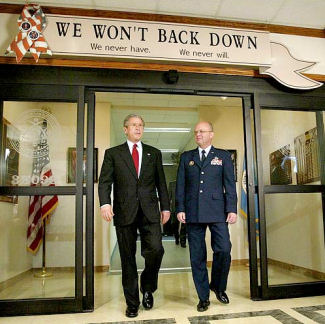
[You can't make this stuff up - the same people who came up with "Mission Accomplished" banner on the USS Lincoln in 2003 made the banner over this door.]

There are just so many things wrong with this picture. Literally and figuratively. The military uniform is only one of them, but let's start there.

It was bad enough to see Michael Hayden, an active duty uniformed military officer, heading the NSA and standing alongside the President of the U.S. as they both tried to defend spying on the American people without any warrants or oversight. But the CIA is a civilian agency, and with Hayden’s installation, active duty or retired military officers would run all [sixteen] of the major spy agencies as well as the intelligence hub, the National Counterterrorism Center.

Just about every defense the Bush administration uses to push their controversial legislation and appointments through has been the "Clinton did it" excuse. Yes, the CIA, in its relatively short history, has had active duty military men heading it, and I have never liked it. I especially don't like it now when it's under an out-of-control President who has been discovered breaking the law (750 laws that we know of):
President Bush has quietly claimed the authority to disobey more than 750 laws enacted since he took office, asserting that he has the power to set aside any statute passed by Congress when it conflicts with his interpretation of the Constitution.

Among the laws Bush said he can ignore are military rules and regulations, affirmative-action provisions, requirements that Congress be told about immigration services problems, "whistle-blower" protections for nuclear regulatory officials, and safeguards against political interference in federally funded research.

Legal scholars say the scope and aggression of Bush's assertions that he can bypass laws represent a concerted effort to expand his power at the expense of Congress, upsetting the balance between the branches of government. The Constitution is clear in assigning to Congress the power to write the laws and to the president a duty "to take care that the laws be faithfully executed." Bush, however, has repeatedly declared that he does not need to "execute" a law he believes is unconstitutional.
General Hayden comes with his own baggage; Hayden doesn't know, understand or respect the Constitution of the United States. When General Hayden appeared at the National Press Club on January 26, 2006, he was asked:
QUESTION: ...the Fourth Amendment of the United States Constitution specifies that you must have probable cause to violate an American's right against unreasonable searches and seizures...

HAYDEN: No, actually - the Fourth Amendment actually protects all of us against unreasonable search and seizure.

QUESTION: But the...

HAYDEN: That's what it says.

QUESTION: The legal measure is probable cause, it says.

HAYDEN: The amendment says: unreasonable search and seizure.

QUESTION: But does it not say "probable cause?"

HAYDEN: No. The amendment says unreasonable search and seizure.

QUESTION: The legal standard is probable cause, General...

HAYDEN: Just to be very clear ... okay... and believe me, if there's any amendment to the Constitution that employees of the National Security Agency are familiar with, it's the fourth. Alright? And it is a reasonableness standard in the fourth amendment. The Constitutional standard is "reasonable."

The fourth amendment to the Constitution of the United States in its entirety:
The right of the people to be secure in their persons, houses, papers, and effects, against unreasonable searches and seizures, shall not be violated, and no warrants issue, but upon probable cause, supported by oath or affirmation and particularly describing the place to be searched, and the persons or things to be seized.
See the video clip at Crooks & Liars.

Some Senators, like Susan Collins of Maine (and a Republican-in-Democrats'-clothing, Dianne Feinstein of California) have suggested that Hayden retire from the Air Force, but that doesn't address the slate of other objections to this candidate and, ultimately, to the real problem - Bush, and where he is taking this nation. Americans and their elected representatives can't keep giving Bush and Cheney free reign to wreak havoc and destroy good will around the world. As his impeachable offenses mount, are we waiting for a mushroom cloud to push us into action?

Saturday, May 06, 2006

1-800-SOS-ACLU


In Winsted, Connecticut, Christopher Seekins, 26, was arrested in October, 2005, for cultivating marijuana and possession of drug paraphenalia after police found 100 marijuana plants in his house, along with grow lights, fertilizers and portable heaters. Seekins said they were hemp and part of a research project.
After his arrest, Seekins painted images of the green leaf on his Victorian-style house, each accompanied by the word "hemp." Town officials say they received several complaints because Seekins' home on High Street is visible from Winsted's main thoroughfare.

Seekins has said the large leaves were painted in support of legalization of marijuana. He also believes in the usefulness of hemp, a biological relative of marijuana that is used in products from soap and cosmetics to rope and luggage.
Seekins has agreed to remove the marijuana paintings as part of a plea agreement with prosecutors to avoid jail time.
He pled guilty Thursday in Litchfield Superior Court to a charge of growing marijuana and Supervisory State's Attorney Andrew M. Wittstein agreed to three years probation. He was also barred from painting the leaves on his house again.

The state agreed to drop other charges, such as possession of marijuana with intent to sell. Seekins will have to perform 300 hours of community service and refrain from possessing or using illegal drugs.
UPDATE: Town says it not illegal to paint marijuana leaves on home.
Town officials said the marijuana paintings apparently do not conflict with local laws.

"There's nothing in the property maintenance code that deals with writing on your house," Joe Beadle, chief code enforcement officer, said.

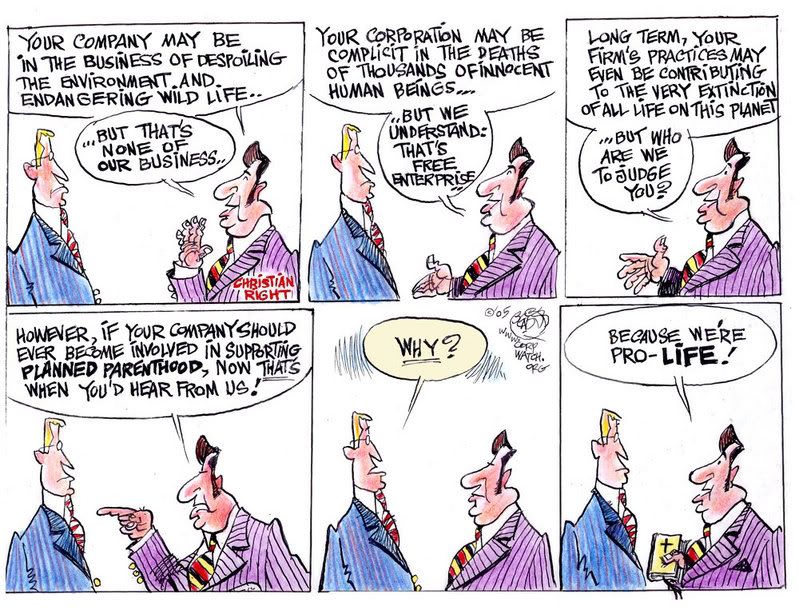
This is a great example of how conservatives go about achieving their goals, such as outlawing abortion and imposing religion on government. In incremental steps, they break down the barriers that serve as sentinels against encroaching erosion of the rights themselves. In this instance, it's a first step in narrowing the Constitutional right of free speech. Seekins agreed to give up his right of free speech in order to stay out of prison. For cultivating marijuana. He lost his right as a citizen to participate in our democracy, a government of citizen-created laws. He is being denied the right to try to influence other citizens to change the law.

I don't know Connecticut law, but I have no doubt that three things are going to happen:

1.) Seekins' neighbors are going to spend an inordinate amount of time with Winsted, Connecticut's City Attorney and the Winsted Town Council trying to enact an ordinance that would outlaw certain words and colors being painted on private property.

2.) Prosecutors (state and federal) are going to be using this case as a precedent for expanding on what they can force citizens to do, by imposing restrictions which on their face would never pass Constitutional-muster.

3.) All that anybody will remember about this case is that somebody got in trouble with the law for having painted pictures of marijuana plants on the side of a house, and that he had to remove them or go to jail. Human nature being what it is, citizens will accept another curb on their Constitutionally-guaranteed rights, believing that those in authority have the immutable right to do whatever they want.

It's Errands' & Chores' Day


Including new collars for the beasties.

Friday, May 05, 2006

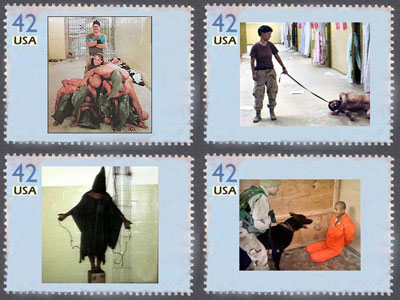
Bush is Raising Taxes

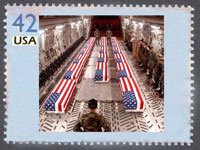
The new 42-cent GW Bush Commemorative stamp. The "Forever" series. Forever WAR.


Just as Reagan did, Bush is raising taxes but hiding it. Reagan did it by calling them "revenue enhancements." Bush is doing it through regressive use taxes.

Wayne Madsen reports:
George W. Bush's War Stamp Tax. According to US Postal Service insiders, the Bush administration, which has prided itself on tax cuts, has imposed a stealth war tax on the American people. In January, the Postal Rate Commission approved a raise in first class postage two cents to 39 cents. The commission has now indicated it wants to raise the price of a first class stamp by three cents to 42 cents next year. The reason for the Bush stamp tax is that when the Bush administration took power in 2001, the Postal Service Fund, a special account established within the Treasury Department, had a substantial surplus. However, in order to pay for its Iraq war adventure, the Bush administration raided the Postal Service Fund and created a deficit. The two successive rate increases have been necessary in order to replenish the fund, according to Postal Service sources. In addition to the Postal Service Fund, the misappropriation of money for the war has also adversely affected the Postal Employees' Compensation Fund, the solvency for which is guaranteed by the Postal Service Fund.

King George's Stamp Tax

The Postal Rate Commission is a gaggle of GOP hacks. The two-term chairman is Mississippian George Omas, a former House of Representatives employee and a member of the National Republican Club of Capitol Hill. The Vice Chairman is Dawn Tisdale, a former postmaster of Smithville, Texas. Another commissioner is Tony Hammond, the 1998 director of campaign operations for the Republican National Committee and an assistant to then RNC chair Haley Barbour. Danny Covington, a one-time GOP House candidate whose term expired in October 2005, and Omas are both Ole Miss graduates and represent a GOP clique beholden to Barbour and Senator Trent Lott.


"Refinery Capacity," You Say, "is Why Gas Prices Are So High"?


Democratic Congressman Peter A. DeFazio of Oregon took to the floor of the House of Representatives and made these remarks on Thursday, May 4, 2006. This man and his staff do their homework. He should be on the cable programs, rebutting the Republican buttheads:
Mr. DeFAZIO. Mr. Speaker, well, let us talk about the energy crisis and the high prices of energy.

The oil men in the White House and the Vice President and the Republican majority say it is just market forces at work. Let us talk about the market forces.

First off, the crude oil market, unlike every other commodity in America, is virtually unregulated. About 75 percent of the crude oil marketed here is sold off the books, and they are doing trades that would be illegal if it was a regulated market, and of course they do not want to regulate it. One trader will sell to another who will sell back, they sell back, they sell back, they sell back until, guess what, they have raised the price and made a lot of money.

Now, unfortunately, someone is going to pay for that. So it is the consumer. In crude oil trading, we have seen a 46 percent increase over 1 year in the margins there. Quite simply, if we just subjected crude oil to the same market controls that are used for all other commodities traded in the United States of America, if we took away this exemption for big oil, then we could drive down the price, it is estimated, 20 to 25 percent immediately at the pump. That would be quite an economic stimulus for this country and do more for the American people than all of George Bush's tax cuts have done for average people, of course, not for the millionaires and billionaires.

Then they say, guess what, prices are high because we do not have enough refineries in America. That is interesting. The American Petroleum Institute circulated a memo just about 10 years ago this day saying, hey, guys out there, they mostly are all guys, guess what, there is too much refinery capacity in this country; if you could squeeze down refinery capacity, you could drive up profits.

Have they done that?

Of the three bucks you are paying for a gallon of gas, the increase in the margin for the refiners has gone up 255 percent in 1 year; and, guess what, there are no new refineries under construction.

Now they want to pretend it is those darn environmentalists. Well, no, it was not the environmentalists. Of the 55 refineries closed in America in the last 10 years, they were all closed for economic reasons, mostly oil company mergers. Not a single one was closed for environmental purposes or objections.

So they are doing a wonderful thing here. Valero, fastest-growing, biggest energy refiner, who had a very small company just a few years ago, their chief operating officer, when asked about building more refineries, he said, why would we want to do that? It is working quite well the way it is. Artificial shortage of refinery capacity.

So perhaps we could impose a windfall profits tax on the likes of ExxonMobil, $36 billion of profit last year, largest corporate profit for anybody in the history of the world in 1 year, $100 million a day of profit.

Now they did give away 4 days of profit to their CEO when he retired. He got a $400 million retirement, but they had the rest of that money to spend elsewhere.

What did they spend it on? New refinery capacity? No. Exploring for new oil? No. They bought back a bunch of their stock to increase the value of the stock options of the other executives at ExxonMobil. So about a windfall profits tax on money that they make that they do not invest in new refineries, new production capacity or alternative fuels, but the rest of it, it should be taxed at a very high rate to stop their price gouging and excess profit-taking.

Now the Republican answer has been that they want to give everybody a $100 rebate. Is that not nice? Well, except we are running a deficit. So they would borrow the money, obligating American taxpayers today and their kids and grandkids because we will pay it off over 30 years. They would borrow the money to give everybody a measly $100 rebate. Because God forbid that we should ask the oil companies to rein in the profiteering and the speculation in crude oil, that we should have them stop creating a false refinery capacity squeeze which has driven up their profits tremendously.

But they do want to investigate price gouging. It was in a bill that passed the House last year. Guess who they think is price gouging? These little guys down here, the distributors and retailers.

I just met with the independent distributors today. They are getting six cents a gallon. Five years ago, they got six cents a gallon. Five years ago, that was 6 percent. Today that is 2 percent. So it is not the distributors and retailers here, with the exception of some of the company-owned stations, that are making that big profit.

It is right up here. It is big oil. It is the artificial refinery shortage that they have created, and it is this profit-sharing and hot money speculation in crude oil. We could take significant steps here to fix it, but, guess what, they [Republicans] get a little too much money from them at campaign time. It ain't going to happen.


Secret U.S. Plans For Iraq's Oil Spark Political Fight Between Neocons and Big Oil


On March 21, 2005, investigative journalist Greg Palast appeared on Democracy Now! with Amy Goodman. This report was exclusive to the BBC and aired there a week earlier. A rush transcript of Amy Goodman's entire interview with Palast is available at the Democracy Now! website.

Palast charged that President Bush was planning to invade Iraq before the September 11th attacks [Link] and was considering two very different plans about what to do with Iraq's oil. The plans reportedly sparked a political fight between neoconservatives and big oil companies, and may help explain the appointments of Paul Wolfowitz to head the World Bank and John Bolton as ambassador to the United Nations:
GREG PALAST: Some people believe George Bush had a secret plan for Iraq's oil. It's not that simple. In fact, we found two plans. While there was a hot war being fought in Iraq, here in Washington, there was a cold war being fought. On one side, the Pentagon and its neo-con friends, and on the other, the State Department and its allies in big oil.

January 2001, George Bush waltzes into office on a gusher of oil money, swearing that the U.S. has no plans to remake any nation. Yet at the same time, on the other side of the U.S.A., a secret meeting was in the works to plan for the invasion of Iraq to overthrow Saddam and to decide what to do with Iraq's oil. Across the bridge from San Francisco, the State Department convened the meeting in this house, a bit of Baghdad in America. Falah Aljibury is an Iraqi exile who acted as Ronald Reagan's back channel to Saddam's regime. He hosted those early war councils for the Bush team.

VOICE OF FALAH ALJIBURY: It is an invasion, but it will act like a coup. The original plan was to liberate Iraq from the Saddamists and from the regime, to stabilize the country. A leader, an Iraqi leader known for his decency and ability to work with the allied forces, will step forward.

GREG PALAST: Aljibury, a key link between big oil, big finance and OPEC, interviewed the candidates for a strongman to replace Saddam in advance of the invasion.

VOICE OF FALAH ALJIBURY: This transitional leader that we have interviewed before will come in, head all of the government systems, and quickly bring the people back to work.

GREG PALAST: In other words, just topple Saddam. Most Baathists would stay in power. As for the oil fields, the state would keep ownership. But after September 11, Washington's power center shifted to the right. Paul Wolfowitz and his neo-cons were now in charge. "News Night" learned they junked plan A, the quick coup. The neo-cons wanted to use the invasion of Iraq to end the Arab stranglehold on oil. They aimed to bring down the criminal OPEC monopoly.

VOICE OF ARI COHEN: OPEC is a cartel. As a cartel, it regulates the output and it tries to get the price as high as possible for its members without destroying the goose that is laying the golden eggs. So, OPEC, the Organization for Petroleum Exporting Countries, would behave in a way that, at least in this country (in the United States), would be prosecutable.

GREG PALAST: At the heart of the “smash OPEC” scheme was a radical plan, which we discovered in this document, completed a month before the invasion, for the privatization of all Iraq's assets, especially in the oil and supporting industries.

VOICE OF ARI COHEN: By having massive oil holdings in private hands that are not marching to the drumbeat of OPEC, you weaken OPEC politically and you improve the lot of a consumer and of western economy, in general.

GREG PALAST: Chatter about the sell-off plan boosted accusations that the invasion was aimed at seizing Iraq's oil.

VOICE OF ROBERT EBEL: The thought was, “Why are you going into Iraq? It's about oil, isn't it?” And my response was, “No, it’s about getting rid of Saddam Hussein. The morning after, it's about oil.”

GREG PALAST: In the run-up to war, the administration sent Ebel to meet with Ahmed Chalabi, America's front man to take over Iraq. Chalabi embraced the sell-off of Iraq's oil.

VOICE OF ROBERT EBEL: These people had been out of Iraq for some time. Chalabi was the senior person. They felt that was the way to quick growth, to privatize, to get, you know, lots of companies in, get them spending money to develop production.

GREG PALAST: Resistance to the plan to sell off Iraq's oil bubbled up from a most unlikely source: U.S. oil chieftains. Former Shell C.E.O. Philip Carroll was called up long before the tanks rolled.

VOICE OF PHILIP CARROLL: I received a call from someone in the Pentagon saying that they were doing some contingency planning in association with the possibility of war in Iraq. They needed some help and assistance from someone who had spent time in that industry.

GREG PALAST: But the oil man refused to carry out the neo-con plan.

VOICE OF PHILIP CARROLL: There were models everywhere from the total privatization to partial privatization, etc., etc. There were all sorts of ideas floated about the economy of Iraq and what ought to be done. I was very clear that there was to be no privatization of Iraqi oil resources or facilities while I was involved. End of statement.

GREG PALAST: Even some of those who plotted Saddam's overthrow complained that privatization plans added fuel to the insurgency, costing American, British, and Iraqi lives.

VOICE OF FALAH ALJIBURY: Insurgents and those who wanted to destabilize a new Iraq have used this as means of saying, “Look, you're losing your country. You’re losing your leadership. You're losing all of your resources to a bunch of wealthy people. A bunch of billionaires in the world want to take you over and make your life miserable.” And we saw an increase in the bombing of oil facilities, pipelines, of course, built on -- built on the premise that privatization is coming.

GREG PALAST: So, how is the State Department going to douse the flames? Here in Houston, the oil capital of America, the industry wasn't too happy about what was going on. “News Night" discovered that big oil chieftains in Iraq demanded a new policy. The job fell to the Texas think tank, founded by Jim Baker, one-time secretary of State, whose law firm now represents George W. Bush, the government of Saudi Arabia, and Exxon Oil.

VOICE OF AMY JAFFE: The bottom line is, we were very concerned about the perceptions that somehow we were doing this to steal the oil. You cannot use military means to impose privatization. It has to come from the society below; that has to be what the country wants to do. We were very concerned that there were going to be images on Al Jazeera TV, or in Western media that was very to the left, showing the Americans standing with military uniforms on in the oil fields.

GREG PALAST: The State Department reluctantly handed us the plan, confidential until now, drafted by Jaffe. There are seven options given to Iraq's future governments, not a single one privatization. The neo-con scheme was dead because taking on OPEC and forcing down the price of petroleum did not suit big oil.

VOICE OF AMY JAFFE: I'm not sure that if I were the chairman of an American company and you put me on a lie detector test that I would say that I thought high oil prices were bad for me or my company.

GREG PALAST: So I asked Shell's former boss if the neo-con's agenda matched that of the oil industry.

VOICE OF PHILIP CARROLL: They're absolutely poles apart. Many neo-conservatives are people who do have certain ideological beliefs about markets, about democracy, about this, that and the other. International oil companies, without exception, are very pragmatic, commercial organizations. They don't have a theology. They don't have a doctrine. They are going to do what is in the best interest of their shareholders.

GREG PALAST: Americans have never paid so much for gasoline. Big oil execs are grinning. They've never seen such big profits. The neo-cons say we missed the chance to stop this run-up in oil prices. All we had to do was sell off Iraq's oil fields. But big oil killed it.

VOICE OF PHILIP CARROLL: The question, both politically and economically, would be so complex and so difficult that I don't think anyone really serious would think about trying to privatize it.

VOICE OF FALAH ALJIBURY: In that case, let's go and nationalize Shell, to follow his logic. I think that in the late 20th century, early 21st century, to compare government-run industries with privately run industries, it's a no-brainer, as we say. The comparison is in favor of privately owned oil, privately owned assets.

VOICE OF PHILIP CARROLL: I would agree with that statement. To privatize would be a no-brainer. It would only be thought about someone -- by someone with no brain.

GREG PALAST: Headless or heartless, America has given Iraq a state-controlled oil monopoly, big oil and OPEC will have their $56-a-barrel oil, and Wolfowitz and the neo-cons are looking for new jobs.

Goodman and Palast discuss the report:
AMY GOODMAN: That report by investigative journalist Greg Palast, who joins us now in our studio before we move on to protests around the country. Welcome, Greg Palast.

GREG PALAST: Glad to be here, Amy.

AMY GOODMAN: An explosive report on these two plans. And tie them in now to the nomination of John Bolton to be U.S. Ambassador to the United Nations and Paul Wolfowitz to head the World Bank.

GREG PALAST: Well, only in weird Bush world is nomination to the presidency of the World Bank considered a punishment job. Basically Wolfowitz is being tossed out head first out of the Pentagon because he decided to take on one enemy too big for his own teeth, which is big oil. And, see, the main spoils of the war in Iraq is a seat on OPEC. It's not just the fields; it is a seat on OPEC. What do we do with that seat? The neo-cons wanted to use our control of Iraq's oil to smash OPEC, to smash the power of what they see as an Arab-controlled monopoly and Saudi Arabia. Unfortunately, that also meant smashing $56-a-barrel oil prices, and the oil industry was deeply unhappy. So, there was a neo-con plan put out. In fact, you broke the report here two years ago when we were on the air saying that there was a plan to privatize and sell off all of Iraq's oil fields. There was. Then Phil Carroll of Shell Oil was assigned by George Bush to baby-sit the situation in Iraq. The oil man went in and said there ain't going to be no privatization on my watch. We don't work that way. You have to understand, oil companies, when they privatize, the big oil companies never get it, it’s always the cronies of Chalabi and who’s ever in power in any country. So, the oil companies did not want to be locked out, so they weren't going to go along with it. Plus, they didn't like the neo-con idea that if there was privatization, and production would be ramped up, OPEC would be destroyed, oil prices would fall apart, and that would be the end of record profits for the oil companies. So, a new report was secretly ordered up by a guy named Rob McKee, who took the Shell man's place. McKee is from ConocoPhillips, paid $25 million by Conoco in his last year there, assigned by Bush to Iraq to the oil ministry there. And he ordered up a new study which was done by the Jim Baker Institute. Now Jim Baker represents Exxon and the Saudi government. And the Baker Institute people, and the people they worked with, came up with a report that said that there would be a state-controlled company, which would be very OPEC-friendly, very oil company-friendly and would establish profit sharing agreements with international oil companies. And that was their recommendation. Privatization was dead out, and they were just livid about Wolfowitz. The woman who is the chief guider on that project said, you know, here's Wolfowitz talking about democracy, yet he wants to do what 99% of Iraqis don't want. The oil companies don't want to own oil fields in flames. So, basically Wolfowitz came up against big oil and his cronies, Doug Fife and the others. So, their privatization plans, because they kept pushing them, just absolutely killed them off. And we also got, of course, a story that you saw at the beginning, that at the very beginning of the war, in fact, even before Bush was inaugurated, but within a couple of weeks, there was a meeting of oil industry people, associated with Iraq, planning the overthrow of Saddam. An invasion which would look like a coup d'etat. We would actually send in the 82nd Airborne and replace Saddam, just give a new dictator his mustache, the Baathists would stay in power, nothing would change. It was in and out. I think people got the wrong impression with Bob Woodward's book: Colin Powell did not oppose the invasion of Iraq. They were planning this from, like I say, the second week in office. Powell and the State Department people were opposing a long occupation and a remaking of Iraq. They just wanted to get rid of the top guy. They were quite happy with the Baathists, and they wanted to keep the oil flowing, and they didn't want this type of situation we have now with a bloody, brutal occupation, which is also, you know, jamming up the oil fields and creating a major problem. So that, again, it is the State department simply had a different plan for invasion than the neo-cons. But after September 11, the neo-cons kind of seized control of policy. Now we've had a new kind of policy coup d'etat by big oil and the -- and OPEC allies in the government. They're in charge now.

AMY GOODMAN: It's also hard to believe that John Bolton becoming U.S. Ambassador to the United Nations is any kind of step down.

GREG PALAST: For them, you know, it is pushing the Bush policy. But you have to understand that the real levers of power are not in these public jawboning jobs. The real levers of power are behind those closed walls. So Wolfowitz had his power. He now has to take his hands off the levers, and Bolton is now in a position where he is told what to say, and he is not a person setting policy. The neo-cons understand what's happening here, and they are screaming bloody murder. But they’re all being purged. This is a very big change in U.S. policy toward people like Negroponte, who are State Department establishment, oil-friendly, OPEC-friendly, Saudi-friendly.

AMY GOODMAN: Well, on that note, I want to thank you very much for being with us. The investigation, a joint BBC-Harper’s magazine investigation. Greg Palast’s latest piece out today in Harper's magazine, called "OPEC on the March: Why Iraq Still Sells Its Oil a la Cartel." Thank you, Greg.

GREG PALAST: You're welcome.

Prairie Weather has excerpted (and discusses) Palast's article in Harper's.

"Daddy's Favorite Little State Dept. Subversive and Bestest Spy," Liz Cheney, Goes on Maternity Leave

[Liz Cheney, her husband (Phil Perry) and their four children joins her parents on the stage of the Republican National Convention, September 2004.]


Elizabeth Cheney, Vice President Dick Cheney's older daughter, left the post that her father created for her at the State Department to await the birth of her fifth child:
Two State Department officials yesterday confirmed that Friday will be Ms. Cheney's last day at Foggy Bottom before an open-ended maternity leave. Foreign service officers are eligible for one year of unpaid maternity leave and civil service employees at the State Department can have 12 weeks, though they can apply for more time.
And she could, no doubt, get more time. But staying home to bond and care for her children, while a Republican-value (heh), apparently isn't a Liz Cheney value. Her father, the country, the WORLD, couldn't get along without her, so her children will continue to be raised by others.

Liz Cheney is too important to the Bush administration at this point in time, when Bush is preparing to go to war with Iran, and an integral part of her father's administration, a liaison between him and his staff:
For White House and campaign staffers, the Cheney family can be dangerous to cross and easy to disappoint. Since taking office, Cheney is on his fourth press secretary, and all of them have appeared to be afraid of even trying to pass on tough or annoying questions from reporters. Prospective Cheney staffers are expected to be "part of The Family." The connotation is not quite the Sopranos, but it's not about baking cookies, either.

...

Mary Matalin communicated with Cheney "through Liz," the veep's 37-year-old daughter, who recently quit her job as a deputy assistant secretary of State for Near Eastern Affairs to work on the Bush-Cheney re-election campaign. Matalin readily acknowledges the central role played by the Cheney family. "They family together, they work together," she says. "It's a seamless operation." Liz Cheney says: "Family members can be completely honest. We're very direct with each other." That is not always true of Cheney staffers, who sometimes feel intimidated by going up against The Family.

...

The mother of four, [Liz] was back at work within a week of having the Cheneys' first grandson [4th child] earlier this month. She has e-mailed Bush-Cheney officials as early as 5 a.m., and she was even seen working during Ronald Reagan's funeral, sending messages via BlackBerry from inside the National Cathedral. A staffer wrote back, "Where are you e-mailing from? I just saw you on TV."

As a professional tummler in Bush's upcoming war with Iran:
Elizabeth Cheney was one of the architects of the Middle East Partnership Initiative, a multi-million dollar aid initiative aimed at spurring democratic reform in the region. She was also instrumental in pushing through the recently announced $75 million aid package for broadcasting pro-democracy programs into Iran and helping that country's liberal dissidents.

Elizabeth Cheney is a former associate at the former deputy secretary of state Richard Armitage's consulting firm. In some ways, her 2003 appointment to the State Department represented a political marriage between the neoconservatives in the administration aligned with her father, and the career foreign service loyal to Mr. Armitage.

This article supports the false impression that Armitage was at odds with Bush and Cheney over the Iraq war, when that wasn't the case. Armitage and his boss, Colin Powell, weren't against going to war in Iraq; they were against going into Iraq as Bush and Cheney went into Iraq; without sufficient troops or a plan for the post-war reconstruction. There are people in the State Department, however, career diplomats who are not happy with how the Bush administration has cast aside the role that diplomacy plays in keeping peace in the world.

Liz Cheney's job has been to "spur democratic reform in the Middle East" by crafting oldstyle conservative policies and programs from the Cold War days that undermine existing governments that U.S. doesn't like:
The project, which will spend $US7 million ($9.6 million) in the current fiscal year, would become many times larger next year if Congress approves a broad request for $US85 million that the White House has requested for scholarships, exchange programs, radio and television broadcasts and other activities aimed at shaking up Iran's political system.

The effort, overseen by Elizabeth Cheney, a deputy assistant secretary of state who is a daughter of the Vice-President, Dick Cheney, has been denounced by Iran's leaders as meddling in their internal affairs.

It comes at a time of escalating confrontation between Iran and the west over Tehran's nuclear program, exacerbated by reports, denied by the White House, that a military option is also on the table.

While the US has marshalled international support for diplomatic pressure on Iran, many Asian and European allies have expressed misgivings about other avenues of pressure, seen as aimed at undermining the government in Tehran. One Asian diplomat, who refused to be named, said the effort was reminiscent of the subsidies the US provided to Iraqi exile groups in the 1990s. "They don't call it 'regime change,' but that is obviously what it is," he said.

To find people to promote change in Iran, the State Department has announced a competition for grant applications. A website advertisement says applicants "must outline activities linked to reform and demonstrate how the proposed approach would achieve sustainable impact in Iran".

A State Department official said it had received numerous applications. But he admitted that various groups were squabbling over how and who would be best to promote reform.

The biggest problem for the applicants is the risks they might face. There have been reports in Iran of advocates of change being arrested after meeting US officials at conferences, though some experts say Iran has exaggerated those reports in order to discourage contacts with the West.

Other experts said some applicants might not be the most suitable. "It sounds good to fund civil society groups, but not when you don't know who they are," said Vali Nasr, an Iranian-born professor at the Naval Postgraduate School in Monterey, California. "No real group wants a direct affiliation with the US. It will just get them into trouble with the Government."

This program is just a repeat of what the U.S. has been doing for decades, and why "they hate us." It's not "for our freedom and democracy." It's for depriving them of theirs. Brutally. If it had anything to do with bringing freedom and democracy to people, we would be undermining the governments of Kuwait and Saudi Arabia.

The United States has aggressively interfered in the internal affairs of other nations (as long ago as a hundred years), overthrowing at least fourteen sovereign foreign governments, whether by supporting friendly coups, by fomenting internal revolutions, or by just plain military invasions. These include Cuba, Iran, Viet Nam, Chile, Grenada, Nicaragua, Guatemala, Panama, and most recently, Iraq.

One good book to read all about it is "Overthrow : America's Century of Regime Change from Hawaii to Iraq" by Stephen Kinzer. Another is "Confessions of an Economic Hit Man" by John Perkins, which offers a glimpse into America's certain future as a third world country, if we continue on the path that Republicans have us on. With some twists. The U.S.' roads to our resources are already built, so the foreclosers won't be pressing America's unemployed into road-building servitude. Unemployed Americans with guns are more likely to be hired to clear tenants or resisters off lands intended for 'harvest.'

If It's Friday, The Cats Must Be Blogging

Nationalize Oil - There, It's Out on the Table

The "N" Word - Take Back the Oil Companies


Nationalizing the oil industry should be the central tenet of any progressive political movement. Evidence of the industry's involvement in the invasion of Iraq as well as its obvious complicity in corrupting the political system should provide ample proof that the oil giants are a clear and present danger to democracy and need to be put under state control.

In an era of oil scarcity we no longer have the luxury of allowing a handful of corporate plutocrats to decide the fate of the global economy. The industry chieftains have deliberately closed down refineries to lower production and enhance their profits. They have sluiced boatloads of cash into the political system to ensure that congress and the executive carry out their directives. Presently, there's not an inch of daylight between the Exxon boardroom and 1600 Pennsylvania Ave, they both operate off the very same script.

The oil industry is the primary beneficiary of Bush's war in Iraq. Industry executives had a place at the table when Dick Cheney carved up Iraq's oil fields for future distribution among America's elite corporations. Freedom of Information requests have provided "edited documents from the Cheney Energy Policy group. One of these was a map showing lease areas where oil drilling was planned (in Iraq). Another consisted of a list of 40 oil companies from 30 nations who were slated to get permission to drill for oil in Saddam Hussein's Iraq. The problem for the US and Britain was that their oil companies were absent from this list of those who were to get concessions.The US and UK would thus be frozen out of what was clearly one of the greatest material prizes in world history."
("The CFR Debates" Lawrence Shoup; Z Magazine March 2006)
Read more...

Tuesday, May 02, 2006

Allergies Worse Than Usual? Sex Discrimination is the Culprit!


Experts across the country say that the highest pollen counts they've seen in a decade are being recorded:
"I looked at the total pollen counts for this season compared to last, and, at this point, we have already reached 80-90 percent of what we saw for the entire season last year," said Albany, N.Y.-based allergy specialist Dr. David Shulan, a spokesman for the American Academy of Allergy, Asthma and Immunology (AAAAI).

The culprit has been a mild, wet winter and early spring, plus unusually warm days.

Not exactly.

It seems that the plant population in the U.S. is experiencing the same problem that humans have in China: Too many males.

During the building boom around the nation the last decade, landscape designers and contractors planted more male plants and fewer female plants:
...[M]ale plants have been popular because they don't produce messy fruit or seed pods -- but they are responsible for most of the pollen in the air. It's better to plant females or plants with both male and female parts, Ogren says, since the pollen doesn't spread as much.


Petroleum Products

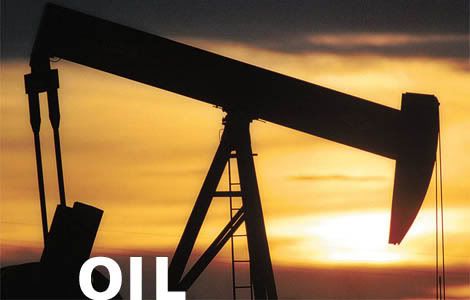
Just a reminder that when the price of this goes up...


...the price of this goes up.

Gasoline prices will remain high for years to come and will be largely unaffected by the new White House plan to bring them down, Bush administration officials said Sunday.


Most everything in our modern lives requires oil to manufacture. Once the oil is gone, everything else is gone. That includes pharmaceutical drugs.

Technorati Tags: , , , , , , , , , , ,

NSA - Giving Out Americans' Names


This week's Newsweek [May 2, 2006 issue] reports:
The National Security Agency is not supposed to target Americans; when a U.S. citizen's name comes up in an NSA "intercept," the agency routinely minimizes dissemination of the info by masking the name before it distributes the report to other U.S. agencies. But it's now clear the agency disseminates thousands of U.S. names. U.N. ambassador nominee John Bolton told a Senate confirmation hearing he had requested that U.S. names be unmasked from NSA intercepts on a handful of occasions; the State Department said he had made 10 such requests since 2001, and that the department as a whole had made 400 similar requests over the same period. But evidence is emerging that NSA regularly supplies uncensored intercepts, including named Americans, to other agencies far more often than even many top intel officials knew.

According to information obtained by NEWSWEEK, since January 2004 NSA received—and fulfilled—between 3,000 and 3, 500 requests from other agencies to supply the names of U.S. citizens and officials (and citizens of other countries that help NSA eavesdrop around the world, including Britain, Canada and Australia) that initially were deleted from raw intercept reports. Sources say the number of names disclosed by NSA to other agencies during this period is more than 10,000. About one third of such disclosures were made to officials at the policymaking level; most of the rest were disclosed to other intel agencies and, perhaps surprisingly, only a small proportion to law-enforcement agencies. Civil libertarians expressed dismay at the numbers. An official familiar with NSA procedures insisted the agency maintains careful logs of all requests for U.S. names and doles out such info only after agency officials are satisfied "that the requester needs the information [and that it's] necessary to understand the foreign intelligence or assess its importance."


Technorati Tags: , , , , , , , , , , , , , ,

Bush Authorized NSA Domestic Spying Before 9/11


Jason Leopold reports at Truthout:
The National Security Agency advised President Bush in early 2001 that it had been eavesdropping on Americans during the course of its work monitoring suspected terrorists and foreigners believed to have ties to terrorist groups, according to a declassified document.

The NSA's vast data-mining activities began shortly after Bush was sworn in as president and the document contradicts his assertion that the 9/11 attacks prompted him to take the unprecedented step of signing a secret executive order authorizing the NSA to monitor a select number of American citizens thought to have ties to terrorist groups.

In its "Transition 2001" report, the NSA said that the ever-changing world of global communication means that "American communication and targeted adversary communication will coexist."

...

What had long been understood to be protocol in the event that the NSA spied on average Americans was that the agency would black out the identities of those individuals or immediately destroy the information.

But according to people who worked at the NSA as encryption specialists during this time, that's not what happened. On orders from Defense Department officials and President Bush, the agency kept a running list of the names of Americans in its system and made it readily available to a number of senior officials in the Bush administration, these sources said, which in essence meant the NSA was conducting a covert domestic surveillance operation in violation of the law.

James Risen, author of the book State of War and credited with first breaking the story about the NSA's domestic surveillance operations, said President Bush personally authorized a change in the agency's long-standing policies shortly after he was sworn in in 2001.

"The president personally and directly authorized new operations, like the NSA's domestic surveillance program, that almost certainly would never have been approved under normal circumstances and that raised serious legal or political questions," Risen wrote in the book. "Because of the fevered climate created throughout the government by the president and his senior advisers, Bush sent signals of what he wanted done, without explicit presidential orders" and "the most ambitious got the message."

The NSA's domestic surveillance activities that began in early 2001 reached a boiling point shortly after 9/11, when senior administration officials and top intelligence officials asked the NSA to share that data with other intelligence officials who worked for the FBI and the CIA to hunt down terrorists that might be in the United States. However the NSA, on advice from its lawyers, destroyed the records, fearing the agency could be subjected to lawsuits by American citizens identified in the agency's raw intelligence reports.

The declassified report says that the "Director of the National Security Agency is obligated by law to keep Congress fully and currently formed of intelligence activities." But that didn't happen. When news of the NSA's clandestine domestic spying operation, which President Bush said he had authorized in 2002, was uncovered last month by the New York Times, Democratic and Republican members of Congress appeared outraged, claiming that they were never informed of the covert surveillance operation. It's unclear whether the executive order signed by Bush removes the NSA Director from his duty to brief members of Congress about the agency's intelligence gathering programs.

Eavesdropping on Americans required intelligence officials to obtain a surveillance warrant from a special court and show probable cause that the person they wanted to monitor was communicating with suspected terrorists overseas. But Bush said that the process for obtaining such warrants under the 1978 Federal Intelligence Surveillance Act was, at times, "cumbersome."

In a December 22, letter to the Senate Select Committee on Intelligence, Assistant Attorney General William E. Moschella wrote that the "President determined it was necessary following September 11 to create an early warning detection system. FISA could not have provided the speed and agility required for the early warning detection system."

However, what remains murky about that line of reasoning is that after 9/11, former Attorney General John Ashcroft undertook a full-fledged lobbying campaign to loosen the rules and the laws governing FISA to make it easier for the intelligence community to obtain warrants for wiretaps to spy on Americans who might have ties to terrorists. Since the legislative change, more than 4,000 surveillance warrants have been approved by the FISA court, leading many to wonder why Bush selectively chose to bypass the court for what he said were a select number of individuals.

More than a dozen legal scholars dispute Moschella's legal analysis, saying in a letter just sent to Congress that the White House failed to identify "any plausible legal authority for such surveillance."

"The program appears on its face to violate existing law," wrote the scholars of constitutional law, some of whom worked in various senior capacities in Republican and Democratic administrations, in an extraordinary letter to Congress that laid out, point by point, why the president is unauthorized to permit the NSA to spy on Americans and how he broke the law by approving it.

"Even conceding that the President in his role as Commander in Chief may generally collect 'signals intelligence' on the enemy abroad, Congress indisputably has authority to regulate electronic surveillance within the United States, as it has done in FISA," the letter states. "Where Congress has so regulated, the President can act in contravention of statute only if his authority is exclusive, that is, not subject to the check of statutory regulation. The DOJ letter pointedly does not make that extraordinary claim. The Supreme Court has never upheld warrantless wiretapping within the United States."

Additionally, "if the administration felt that FISA was insufficient, the proper course was to seek legislative amendment, as it did with other aspects of FISA in the Patriot Act, and as Congress expressly contemplated when it enacted the wartime wiretap provision in FISA," the letter continues. "One of the crucial features of a constitutional democracy is that it is always open to the President - or anyone else - to seek to change the law. But it is also beyond dispute that, in such a democracy, the President cannot simply violate criminal laws behind closed doors because he deems them obsolete or impracticable."

Jeffrey Smith, the former General Counsel for the CIA under the Clinton administration, also weighed in on the controversy Wednesday. Smith said he wants to testify at hearings that Bush overstepped his authority and broke the law. His own legal opinion on the spy program was included in a 14-page letter to the House Select Committee on Intelligence that said that President Bush does not have the legal authority to order the NSA to spy on American citizens, aides to Congressman John Conyers said Wednesday evening.

"It is not credible that the 2001 authorization to use force provides authority for the president to ignore the requirements of FISA," Smith wrote, adding that if President Bush's executive order authorizing a covert domestic surveillance operation is upheld as legal "it would be a dramatic expansion of presidential authority affecting the rights of our fellow citizens that undermines the checks and balances of our system, which lie at the very heart of the Constitution."

Still, one thing that appears to be indisputable is that the NSA surveillance began well before 9/11 and months before President Bush claims Congress gave him the power to use military force against terrorist threats, which Bush says is why he believed he had the legal right to bypass the judicial process.

According to the online magazine Slate, an unnamed official in the telecom industry said NSA's "efforts to obtain call details go back to early 2001, predating the 9/11 attacks and the president's now celebrated secret executive order. The source reports that the NSA approached U.S. carriers and asked for their cooperation in a 'data-mining' operation, which might eventually cull 'millions' of individual calls and e-mails."


Technorati Tags: , , , , , , , , , , , , ,

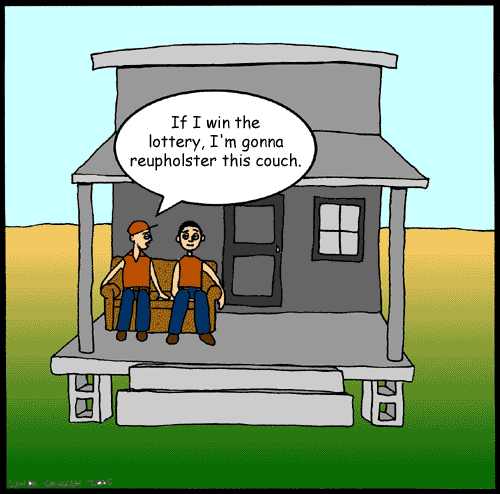
Lottery Fever - Starve a Child, Feed an Addiction?


This is the epitome of regressive taxation - the lives of malnourished and starving children left in the hands of the 'have-nots' (that's who purchase the bulk of lottery tickets) and a get-rich-quick scheme. This is what conservative policies have brought the world to:
The United Nations is planning a global lottery to raise about $500 million a year to combat extreme hunger that threatens the lives of 146 million young children in the poorest nations of Africa, Asia and Latin America.

The UN's World Food Program wants to sell scratch-off lottery cards for 1 euro ($1.26), beginning in Europe within the next year. France and Spain have agreed to market the tickets, according to WFP Director Cecile Sportis. The cards would reveal a cash prize or a commitment to funding a UN program, such as meals for children.

The UN Children's Fund said in a report today that almost a quarter of children under age 5 in developing nations are undernourished, which stunts their growth and weakens their resistance to illness. The condition causes the deaths of 5.6 million children each year, Unicef said.

``Few things have more impact than nutrition on a child's ability to survive, learn effectively and escape a life of poverty,'' Unicef Executive Director Ann Veneman, the former U.S. agriculture secretary, said in a statement.

The comment by Ann Veneman is why labeling the Bush administration as "evil" is fair and accurate. The Bush administration's policies create a gross inequity in wealth distribution throughout the world, such that CEOs in the U.S. can retire after a dozen years with over $400 million (plus gifts and parting prizes). Their foreign relief policies come with strings that force the creation of more children who will starve to death (if they're lucky) or suffer the effects of malnutrition and poverty for however long they do live.

I wouldn't be surprised to learn that this idea originated with John Bolton, Bush's unconfirmed-yet-serving as U.S. Ambassador to the UN.

Republicans really do think differently than everybody else in the world, including many of their own constituents. In an effort to shift the focus away from themselves, to duck responsibility, Republicans have developed a variation of their "blame game" strategy in which they seek to hide within the greater cloak of humanity: "If you are so concerned about the starving children, why don't you buy a lottery ticket?"

Are you sufficiently misdirected? Does that line have a ring of familiarity? It should. It's a variation of their tax cut argument from 2001: "If you democrats are so against Bush's tax cuts, why don't you give your portion back?"

The answer to both questions is the same: Individually, our taxes don’t go very far, but when they’re pooled, they can accomplish miracles. And it’s been the decision of the people of the U.S., reaffirmed through many election cycles, that when we know the facts and have the opportunity, we choose the common good over individual self-interest. We choose it because the common good is in our best interests, collectively and individually.

When Democrats talk about the economic issues that concern most Americans (living wages, health care and drug costs, retirement and social security, and pensions, college tuition, affordable housing, runaway gas prices) Republicans accuse Democrats of trying to start a class war.

Ellen Terich at Outraged Citizen writes:
Liberals also believe in a progressive income tax, not to wage "class warfare," or spout class envy, or insist that all citizens earn the same amount. That would be absurd. Liberals are smart enough to know that some will rise to positions of wealth in a free society and that is good as it rewards hard work and encourages others to strive for advancement. However, to say that CEO's ought to earn hundreds or thousands of times what their average worker makes because they "work harder" is ridiculous. There are, after all, only 24 hours in a day to work, whether you are the highest or the lowest worker on the corporate ladder. CEO's may work hard and thus earn a high salary, but the average worker often works just as hard, if not harder, to earn his much smaller wage. And, in fact, liberals know that many CEO's salaries are tied to how many workers they lay off. Thus, one person is rewarded with the money he has saved the company by taking it away from others. This should make it clear that the republicans, whose policies are destroying the middle class, creating a new class of millionaires and leaving behind a vast number living in poverty, are the ones actually waging class warfare.

What liberals see as problematic is that some rise to enormous positions of wealth, often with help from the government in the form of subsidies, tax breaks, and elimination of competition and regulation, while others, especially children, go hungry. Liberals don't want to take money away from the wealthy to make them poor; they simply want the wealthy, who have become wealthy mainly because of the advantages they had in this marvelous country, to contribute a little more to help the poor survive, so that no American has to be hungry or homeless.

The only commonality between Republicans and those who voted for them is a shared premise that the world is a violent, dangerous and lonely place. Even without terrorism. This was true for them before September 11, 2001, and will remain true for them no matter what.

It would remain true if all of Al Qaeda was eliminated. Because then there are the sympathizers, throughout the Middle East and elsewhere, within the ruling families themselves. It would remain true if all of the Syrians and all of the Palestinians and Libyans, and Jordanians, and Lebanese and Saudis were eliminated. There would then be the Iranians to worry about. If Iranians were eliminated, (along with all Arabs, all Muslims) there would still be the North Koreans, and the Cubans, and the Chinese and the Russians. And that socialist bastard, Hugo Chavez, so the Venezuelans have to go, too.

Republicans would still find bogeymen in every closet and under every bed. And if bogeymen aren’t under the beds, they’re in the beds. With all the rest of the world eliminated (and that presumes that the U.S. would succeed in wiping out each and every external threat as Republicans perceive them) that leaves those of us on the homefront whose guts the Republicans hate: Liberals and Democrats, and all of the special interest groups that vote left (environmentalists, and women’s groups, Blacks and Hispanics, etc.) Once they were all eliminated, Republicans would start eating their own. Until there was one last man standing. The lone Republican.

That’s the meme running the Republican mind. The same driving force that wants all restraints and regulations on capitalism removed (“destroy all competition, become a monopoly”), that orders the NSA to wiretap American citizens and rescind posse comitatus. The only people that Republicans can trust are themselves. And even themselves, not so much. Nothing is going to change that experience for Republicans – their world is a hostile environment. Their fears have little to do with objective reality:
The odds of dying in an automobile accident each year are about one in 7,000, yet we continue to drive. The odds of dying from heart disease in any given year are one in 400 and of dying from cancer one in 600, yet many of us fail to exercise or maintain a healthy diet. We have learned to live with these common threats to our health. Yet we have been afraid to return to the malls and the skies.

What are the odds of dying on our next flight or next trip to a shopping mall? There are more than 40,000 malls in this country, and each is open about 75 hours per week. If a person shopped for two hours each week and terrorists were able to destroy one mall per week, the odds of being at the wrong place at the wrong time would be approximately 1.5 million to 1. If terrorists destroyed one mall each month, the odds would climb to one in 6 million. This assumes the total destruction of the entire mall; if that unlikely event didn't occur, the odds would become even more favorable.

In another hypothetical but horrible scenario, let us assume that each week one commercial aircraft were hijacked and crashed. What are the odds that a person who goes on one trip per month would be in that plane? There are currently about 18,000 commercial flights a day, and if that person's trip has four flights associated with it, the odds against that person's being on a crashed plane are about 135,000 to 1. If there were only one hijacked plane per month, the odds would be about 540,000 to 1.

Stories in the news media have begun to consider the virtue of a public relations campaign in Muslim nations to bring our side of the war to the populations of these countries. While this can be an important strategy, I would like to suggest that we need an information campaign in this country as well, because a key element of life after Sept. 11 has not been well presented to the public: Our leaders and media have not done a good job of discussing the risks that citizens need to consider when making choices in their daily lives.

We are presented with a continuous stream of stories telling us about the most recent horrible incident and the possibilities of future terrors. Frequent repetition of these stories may lead people to overestimate the likelihood of future dire events. While we need to be made aware of potential dangers, we also need to understand the true probabilities of these risks. In the above examples, the scenarios were pretty extreme; the odds of any one of us being directly affected by a lesser event would be even more remote.

Remoter still are the odds that Republicans, the “Big ‘R’s” (as opposed to the “little ‘r’s,” the constituents) will die from a terrorist attack. Most already live the lives of rock stars, with private jets, homes on walled properties in gated communities with private police forces, armed bodyguards protecting them (and their families) everywhere they go.

Having to watch their own backs 24/7 is an expensive proposition. It’s little wonder why making obscene piles of money is the central focus of Republicans’ lives. Money as a means to power. Money that affords choices, options. Money to pay for a lifestyle that gives them the isolation and protection they feel that they need to be safe. It’s a chicken-and-egg proposition. In trying to make themselves feel safer (an impossibility), Republicans are making the world into a nightmare.

Technorati Tags: , , , , , , , , , , , , , , ,

Monday, May 01, 2006

Bush Team Imposes Thick Veil of Secrecy; Cheney Goes Them One Better


Unilaterally change the law, ignore the law, pick and choose which part of the law you will abide by....ah, life is good for Dictator and his Vice.

The Chicago Tribune is reporting that:
As the Bush administration has dramatically accelerated the classification of information as "top secret" or "confidential," one office is refusing to report on its annual activity in classifying documents: the office of Vice President Dick Cheney.

A standing executive order, strengthened by President Bush in 2003, requires all agencies and "any other entity within the executive branch" to provide an annual accounting of their classification of documents. More than 80 agencies have collectively reported to the National Archives that they made 15.6 million decisions in 2004 to classify information, nearly double the number in 2001, but Cheney continues to insist he is exempt.

Explaining why the vice president has withheld even a tally of his office's secrecy when such offices as the National Security Council routinely report theirs, a spokeswoman said Cheney is "not under any duty" to provide it.

That is only one way the Bush administration, from its opening weeks in 2001, has asserted control over information. By keeping secret so many directives and actions, the administration has precluded the public--and often members of Congress--from knowing about some of the most significant decisions and acts of the White House.

In the aftermath of the terrorist attacks of Sept. 11, 2001, the administration has based much of its need for confidentiality on the imperative of protecting national security at a time of war. Yet experts say Bush and his closest advisers demonstrated their proclivity for privacy well before 9/11:

Starting in the early weeks of his administration with a move to protect the papers of former presidents, Bush has clamped down on the release of government documents. That includes tougher standards for what the public can obtain under the Freedom of Information Act and the creation of a broad new category of "sensitive but unclassified information."

Not only has the administration reported a dramatic increase in the number of documents deemed "top secret," "secret" or "confidential," the president has authorized the reclassification of information that was public for years. An audit by a National Archives office recently found that the CIA acted in a "clearly inappropriate" way regarding about one-third of the documents it reclassified last year.

- The White House has resisted efforts by Congress to gain information, starting with a White House energy task force headed by Cheney and continuing with the president's secret authorization of warrantless surveillance of people inside the United States suspected of communicating with terrorists abroad. Sen. Arlen Specter (R-Pa.) recently threatened to withhold funding for the surveillance program unless the White House starts providing information.

- The administration has withheld the identities of, and accusations against, detainees held in its war on terror, and it censored the findings of a joint House-Senate committee that investigated the events leading to Sept. 11, including a 27-page blackout of Saudi Arabia's alleged connections to the terrorists.

- While maintaining a disciplined and virtually leakproof White House, senior members of the administration have been accused of leaking information to punish a critic of the war in Iraq. The grand jury testimony of a former White House aide reportedly asserts that Bush himself selectively authorized release of once-classified information to counter criticism.
....

...to some, the administration's penchant for secrecy has curtailed crucial public debate.

"It determines the character of our political system," said Steven Aftergood, director of the Project on Government Secrecy at the Federation of American Scientists. "Is it a political process that is open to wide-ranging debate, or is it more like a closed circle of elite decision-makers? I think we've learned, often to our disappointment, that it's the latter."

To others, the insistence that information considered important be kept confidential is part of the Bush White House's insistence on discipline and order.

"I really think they think of it in terms of good governance," said James Carafano, senior fellow for national security and homeland security at the Heritage Foundation, a conservative think tank. "It's a very corporate style of leadership."

Bush has a partner--some say mentor--in Cheney, who from the start resisted efforts to disclose the inner workings of a task force devising administration energy policy. He defeated an unprecedented lawsuit by the Government Accountability Office, Congress' investigative arm, to unveil that task force and carried his fight successfully to the Supreme Court.

As the administration has sealed an increasing number of documents as secret or sensitive, and cut the number of documents being declassified each year, the refusal of Cheney's office to report on the number of its decisions stands out.

A directive from the National Archives, acting under the authority of the executive order bolstered by Bush in March 2003, requires all agencies and executive branch units to report annually on their classification and declassification of files.

Cheney's office maintains that its dual executive and legislative duties make it unique, as the vice president also serves as president of the Senate.

"This matter has been carefully reviewed," said spokeswoman Lea Anne McBride. "It has been determined that the reporting requirement does not apply to the office of the vice president."

To many, the administration's acts are part of a broader campaign to boost the powers of the presidency.

"It's pretty clear that there were certain players in the administration, including the vice president, who felt that the executive branch had not fully exerted all of its constitutional authorities," said David Walker, the U.S. comptroller general.

Walker, as head of the GAO, filed that office's only lawsuit against a government agency in April 2002 as it sought to open the records of Cheney's energy task force. A federal judge dismissed the suit as a struggle between the executive and legislative branches that courts were not empowered to adjudicate.

The White House, in asserting a more powerful executive office, believed "that some of its authorities and privileges had eroded through the years and wanted to redraw that line," Walker said. "We just happened to be one of many situations that they chose to try to test."

Organizations including the Sierra Club also carried the fight to the Supreme Court, which in 2004 voted 7-2 to uphold "a paramount necessity of protecting the executive branch from vexatious litigation" and returned the case to an appeals court, which last year ruled in favor of the White House.

The administration started asserting its power over paper soon after Bush's inauguration by placing a hold on the release of the records of former presidents--beginning with the papers of Ronald Reagan's presidency--and later issuing an executive order granting past presidents a veto over releases.

The Presidential Records Act of 1978, enacted in response to Watergate-era court battles over Nixon's papers, had placed a hold on release of "confidential communications . . . between the president and his advisers" for 12 years after the conclusion of a presidency.

The order Bush issued in 2001 enabled former presidents, or their representatives if the president has died, to screen any request for records and withhold ones considered "privileged." It gave the same authority to vice presidents.

Before the end of its first year, the administration also reversed a long-standing policy on how agencies respond to public requests for records under the Freedom of Information Act.

Clinton's attorney general, Janet Reno, had insisted on "a presumption of disclosure." But Bush's first attorney general, John Ashcroft, arguing that "no leader can operate effectively without confidential advice and counsel," implored all agencies to disclose information requested by the public "only after full and deliberate consideration . . . of the privacy interests that could be implicated."

The administration's policy, stated by Ashcroft in an Oct. 12, 2001, memo, had been in the drafting for months.

But after the Sept. 11 attacks, and amid growing concern about information that terrorists might obtain from the government, then-Bush Chief of Staff Andrew Card issued an order in March 2002 demanding that any "Sensitive but Unclassified Information" related to homeland security be released only after careful consideration "on a case-by-case basis."

That has led to a proliferation of documents stamped "Sensitive but Unclassified" or simply "For Office Use Only," according to experts who track government record-keeping.

The Bush administration is "objectively more secretive" than its recent predecessors, Aftergood said.

"Anyone who calls or writes a government agency for information encounters barriers that were just not there a decade ago," he said. "The government is undergoing a mutation in which we are gradually shifting into another kind of government in which executive authority is supreme and significantly unchecked."


Technorati Tags: , , , , , , , , , , , , , , , , , , , , , , , , , , , , , , ,

Ask the Candidate


In the news today, in Des Moines, Iowa: FORMER NEW YORK CITY MAYOR RUDOLPH GIULIANI SAYS REPUBLICANS ARE OPEN TO WIDE RANGE OF VIEWS.

What does "open to a wide range of views" mean?
Giuliani was in Iowa to raise money for Jeff Lamberti, a Republican candidate for Congress, and Rep. Jim Nussle, who is running unopposed for the Republican nomination for governor.

Raising money for local Republicans even as he ponders his own political future, former New York City Mayor Rudolph Giuliani said Monday that Republicans must increasingly be "a big party" that accepts divergent views.

What does that mean? Republicans "must increasingly be a big party, that accepts divergent views"? Does that mean you can have whatever views you want and still be a Republican? That you can be both pro-choice AND a member of a political party that includes outlawing a woman's right to an abortion in its' platform? Does it mean that you can be a homosexual AND be in the Republican party, just as long as you don't commit any acts of homosexuality?

If the last six years with George W. Bush has shown us nothing else, it's that the people must never assume that a word means the same thing to a politician that it means to everyone else.

The question for Giuliani is: Define "open to" and "accepts."

Bush says that he's open to others' opinions. He says that he accepts that others have different opinions than his. I heard his spokeswoman, Nicolle Wallace, on Hardball this week say it, too. Bush listens to his generals, he listens to his advisers, he listens to "the voices," he listens to everybody. But in the end, "I'm the decider."

Is Giuliani saying that the Republican party should have no platform, no positions that they stand for or believe in as a group, and that whomever gets into office should do whatever he wants to do?

Questions for Lamberti and Nussle: Do you share Giuliani's views and definitions?
Giuliani said that broad-brush themes, like limited government, ought to define the Republican Party not hot-button social issues like abortion and gay rights.

"The major thing that we organize around as Republicans is government that puts more reliance on people than government," Giuliani said. "They (Democrats) tend to think of government solutions as most of the answers."

Questions for Giuliani: Define "limited government." "Reliance on people (instead of government" to do what exactly? What "government" (services) are you proposing that Republicans "limit"?

Questions for Lamberti and Nussle: See above.

If you get elected (and Nussle re-elected), what will you limit in government? SPECIFICALLY. Line-by-line, let's go over the budget. After we go through the budget, let's go outside the budget, to those matters that are philosophical (judicial). What are you going to criminalize and what (if anything) are you going to decriminalize? Prayer in schools? Mangers and creches on public/government property? Forced pregnancies? Prison for women who have abortions?
Meeting with reporters, Giuliani took an immigration stance likely to cause heartburn with GOP conservatives arguing for a pragmatic approach that both toughens border security but also sets up a mechanism for illegal aliens to earn citizenship.

"If you try to deal with it through either extreme, I think you would make a terrible mistake," Giuliani said. "If you were to pass a law making everybody who is here, allegedly, illegally a criminal with a penalty of five years in jail, we would become a much more insecure country. You drive them farther underground, you push them more toward criminal activity."

Questions for Giuliani: What is it that you (and Republicans) are trying to accomplish? Getting rid of the people who are in the U.S. illegally? Tossing a big fat bone to the prison-industrial complex? Creating a secure border so that people seeking low paying work can't enter the country? Creating a secure border so that terrorists/drug smugglers can't enter the country? Tossing a bone to the Republican party's corporate patrons by guaranteeing them cheap labor? Getting the hispanic vote for the Republican party? Creating jobs and increasing the minimum wage for out-of-work citizens?

What do you think the American people (regardless of political party affiliation) want?
Giuliani was also clear he's considering his own future ambitions.

"I am interested in public service again," he said. "My effort this year will be to help Republicans get elected and, quite honestly, a part of it also is saying to myself 'Does it look like I have a chance in 2008?'"

Some strategists believe Giuliani will face significant hurdles in Republican politics because he supports abortion rights and favors tough gun control laws, views that contrast those held by many core Republican voters.

Giuliani is working hard to counter that notion by helping other Republicans get elected, while reaching out to conservatives to ease their concerns.

"I've got a lot of places to go and a lot of people to talk to and a long process to go through to see if it makes sense for me to run for president in 2008," Giuliani said.

Iowa Republican Chairman Ray Hoffman, of Sioux City, declined to handicap Giuliani's outlook in a state where the conservative wing of the party is dominant.

"I hope to really be able to talk to him at some point and say where do you stand on gun control, where do stand on this, where do you stand on that," Hoffman said. "I haven't done that yet."

Questions for Ray Hoffman, Iowa's Republican Chairman: See above. Where do you and the Republican party in Iowa stand on it all?

We have to reject the spin, the slogans, catchy phrases, and demand that the candidates explain precisely what they mean, what they intend to do if elected, and how they are going to go about doing it. In detail. And including their definitions for simple words and terms.

If candidates can't explain it to you, then they can't explain it to those working under them who are expected to implement it.

Technorati Tags: , , , , , , , , , , , , , , ,