Showing posts with label deregulation. Show all posts

Sunday, October 14, 2007

Chuck Schumer: "Meat Inspection Lacking"

ABC's 7Online.com reports:
In the wake of the most recent hamburger recall in our area, there are calls to beef up meat inspections.

Senator Charles Schumer says he will push for a law to improve federal oversight of meat safety.

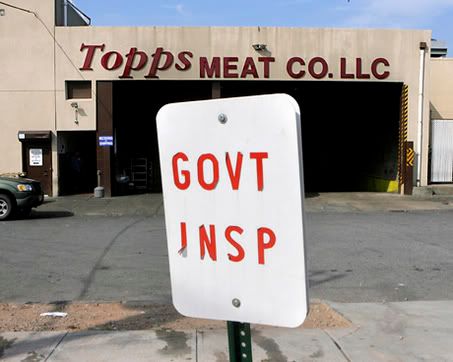
Topps Meat Company of Elizabeth, New Jersey went out of business after recalling nearly 22 million pounds of frozen patties - tainted by E. coli.

Schumer says the USDA has become a toothless tiger when it comes to keeping our meat safe.

Now, Senator Charles Schumer is unveiling a plan that would toughen USDA inspections and give the feds more authority to issue recalls.

I wait with baited breath.

This is a problem that comes from elected officials, such as Schumer, forgetting who they actually work for: The people of the U.S. and not the corporations.
The Chicago Tribune reports:
As alarm bells sounded for the second-largest hamburger recall in history, about 250 of the nation's top food safety officials were in Miami setting the "course for the next 100 years of food safety."

That so many U.S. Department of Agriculture field supervisors were in Florida while New Jersey-based Topps Meat Co. was scrambling to recall 21.7 million pounds of hamburger has rankled some USDA inspectors and food safety advocates.

Several USDA inspectors said in interviews that their workloads are doubling or tripling as they take on the duties of inspectors who have left the department, not to be replaced.

"We've been short the whole time I've been in," said one veteran inspector who asked not to be named. "We don't have enough inspectors, but we have too much management. The inspectors are short all the time and getting spread thinner and thinner."

The Topps crisis began last month, when three consumers in New York and Florida fell ill from E. coli poisoning. Soon after that, at least 32 people were sick. The Topps recall, though, began 18 days after the USDA's Food Safety and Inspection Service confirmed E. coli bacteria in a Topps hamburger.

The undersecretary of agriculture for food safety, Richard Raymond, later said, "We can do better."

FSIS spokeswoman Amanda Eamich, in a written response to questions from the Tribune, said that the USDA's "Miami meeting had no impact on either the timing or decision-making associated with the Topps recall."

FSIS, which regulates meat, poultry and egg production, says it had 7,200 inspectors in 1992 and 7,450 now.

"FSIS ended [fiscal year '07] with the highest number of in-plant employees since 2003," Eamich stated. During the year, FSIS was approved "for more in-plant inspectors than at any time since 2003. The agency has numerous hiring initiatives targeted at recruiting inspectors for these vacancies."

Stan Painter, an inspector and union representative for the American Federation of Government Employees, which represents the inspectors, said the actual number of inspectors is closer to 6,500.

The difference, he said, are unfilled vacancies that FSIS permanently carries.

"There are about 1,000 vacancies," Painter said. "It's steadily gotten worse."

Under the federal Meat Inspection Act, USDA inspectors are required to examine animals that are "prepared at any slaughtering, meat-canning, salting, packing, rendering, or similar establishment," and intended for use as food. Inspectors put a USDA stamp on products that pass inspection and reject items that don't pass.

USDA inspectors visit about 6,000 food-production facilities, but some are so large that they require several inspectors. From April to June of this year, inspectors examined 34 million "livestock carcasses" and condemned 54,546 of them, according to FSIS records. For poultry, the numbers jump to an astounding 2.3 billion carcasses inspected and 11 million condemned animals.

Inspectors: Goals not met

The legal requirements for inspections, combined with a reduced force, mean that the inspection goals have not been met for years, according to inspectors. They say the workload is unrealistic, reducing their duties to cursory checks of company records, not the physical examination of meat, poultry and eggs.

"Inspectors are not ... in the vast majority of processing plants full time," said Felicia Nestor, a senior policy analyst for Food & Water Watch, a Washington-based food safety group. "For the most part, inspectors at processing plants are on patrols, meaning they cover a number of plants."

Thus, she said, the patrols are counted as an inspection because of the possibility that inspectors could show up. Questions about the size of the inspection force have come amid a sharp increase in E. coli-related ground beef recalls over previous years.

In the wake of the Topps case, USDA officials are devising a food safety checklist that each of the nation's estimated 1,500 meatpacking plants must complete. Industry representatives point out that incidents of E. coli had declined for several years before increasing this year.

E. coli has actually "declined something in the order of 72 percent over the last five years," said Jim Hodges, president of the American Meat Institute Foundation. "It's still at a very low rate, statistically."

Hodges said the meat industry has adopted safety measures, such as steam and vinegar washes, to rid carcasses of E. coli.

Topps inspectors

At Topps, three USDA inspectors were assigned to the Elizabeth, N.J., plant, which they visited daily on a rotating basis, USDA's Eamich said. But one of those inspectors was responsible for a total of five processing plants. That means spending one hour and 36 minutes each day in each plant, she said.

"This is a problem we've been pointing out to them forever," Nestor said. "There are vacancies and shortages all over the country. In a lot of places, the patrol assignments are doubled and tripled up."

For FSIS, the problem isn't a new one. Following the E. coli contamination and recall of 19 million pounds of ground beef made by ConAgra in 2002, the Department of Agriculture's inspector general conducted an investigation at the request of Congress. The resulting September 2003 report concluded that it was "FSIS policies that effectively limited the documents the inspectors could review and the enforcement actions they were allowed to take."

The agency, the inspector general found, "needs to be more proactive in its oversight."

It was a tragic case of E. coli contamination in 1993 that led to reforms that inspectors today say their agency is reluctant to enforce. The regulatory changes occurred after E. coli poisoning in Jack in the Box hamburgers killed four children and sickened many others.

A bacterium that lives in some cattle's intestines can contaminate meat during the slaughter process, usually when fecal material comes in contact with a meat carcass. In humans, poisoning of this strain of E. coli can cause bloody diarrhea and urine, severe stomach cramps and kidney damage that can lead to death.

After the Jack in the Box case, the USDA required each meat plant to adopt a Hazard Analysis and Critical Control Point plan. The plans let companies design their own food safety measures, usually around the need to process beef quickly.

"HACCP is an internationally recognized, prevention-based food safety program," Eamich said. "Inspection personnel have full authority to take immediate action to prevent the entry of adulterated products into commerce."

The hope was that meatpacking plants would adopt better practices. But inspectors today say their jobs have been reduced to monitoring a company's hazard analysis plan, instead of enforcing USDA's own inspection regulations.

"They [meatpacking companies] write their own plan," said one inspector, who asked to remain anonymous. "They write everything for themselves. We're 'monitoring' that now. It's just a joke. We mostly check paper now. You can put anything you want on paper."

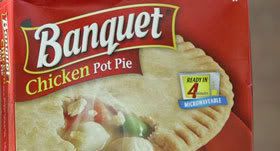
Friday, October 12, 2007

Could This Be Why ConAgra Finally Agreed To Recall Their 'PoisonPies'?

Washington State Health Officials Links Pot Pies to More Salmonella Cases

SeattlePi.nwsource.com reports:
State health officials say they have now linked eight cases of salmonella in Washington to the multistate outbreak blamed on pot pies sold under the Banquet brand name and some store brand names.

The state Health Department says two cases have been identified in Spokane County, and one each in Yakima, Snohomish, Benton, Stevens, Skagit and Pierce counties. The cases occurred from May through September.

A recall has been issued for all chicken, turkey and beef pot pies manufactured by ConAgra Foods.

In addition to those sold under the Banquet label, the store brand versions are sold under the names of Albertson's, Hill Country Fare, Food Lion, Great Value (sold at Wal-Mart stores), Kirkwood, Kroger, Meijer and Western Family.

Salmonella poisoning can cause diarrhea, fever, dehydration, abdominal pain and vomiting.

Give the FDA the power to recall food. "Volunteerism" doesn't work!

Thursday, October 11, 2007

Finally . . .

. . . . ConAgra Recalls Pot Pies

Business Week reports:
ConAgra Foods Inc. recalled all its Banquet pot pies and store brand varieties Thursday after the products were linked to a nationwide salmonella outbreak.

The company included beef pot pies in the recall after initially saying only the chicken and turkey pot pies should not be eaten.

ConAgra issued a consumer alert Tuesday and asked stores nationwide to stop selling the poultry pot pies, but the company stopped short of a recall until Thursday evening.

ConAgra spokeswoman Stephanie Childs said the decision to recall the pies wasn't based on new information, but an abundance of caution.

"We want to make sure there's no confusion with consumers, that these pot pies shouldn't be eaten," Childs said.
She said she knew of no indication of a link between cases of salmonella and the beef pot pies, but the company wanted to be careful as it collects information.

The pot pies made by ConAgra have been linked to at least 165 cases of salmonella in 31 states. The federal Centers for Disease Control and Prevention said at least 30 people have been hospitalized as part of the ongoing outbreak, but so far no deaths have been linked to the pot pies.

The company and federal officials warned customers not to eat the pot pies and to throw them away, and ConAgra is offering refunds. The store brand versions are sold under the names of Albertson's, Hill Country Fare, Food Lion, Great Value (sold at Wal-Mart stores), Kirkwood, Kroger, Meijer and Western Family.

Childs said she could not say how many pot pies are affected by the recall or how many ConAgra produces.

ConAgra officials have said some of the illnesses may be linked to undercooked pot pies, but Childs said the pot pies should not be eaten even if consumers think they have cooked them correctly. The company is revising the cooking directions on its pot pie packages to clarify how long the pies should be cooked in different microwaves.

Amanda Eamich, a spokeswoman for the USDA's Food Safety and Inspection Service, said three investigators are at the ConAgra plant looking for problems with a specific product or production date. ConAgra's recall is voluntary, and Eamich said without a specific connection, a recall wouldn't be ordered.

ConAgra shut down the pot pie production line at its Marshall, Mo., plant, but the rest of the plant, which employs about 650 people, has continued operating, Childs said Wednesday.

Salmonella sickens about 40,000 people a year in the U.S. and kills about 600. Most of the deaths are among people with weaker immune systems such as the elderly or very young.

Salmonella poisoning can cause diarrhea, fever, dehydration, abdominal pain and vomiting. Most cases are caused by undercooked eggs and chicken.

A Minnesota couple sued ConAgra Foods Inc. Thursday for selling the pot pies they believe made their young daughter ill with salmonella. The federal suit, filed in U.S. District Court in St. Paul, seeks damages of more than $75,000 and reimbursement for medical costs.

Consumers who want a refund for their pot pie should send the side panel of the package that contains the UPC code to the following address: ConAgra Foods, Dept. BQPP, P.O. Box 3768, Omaha, NE 68103-0768. Consumers with questions can call the company toll free at 866-484-8671.

This changes nothing, however, with regard to reregulation.

ConAgra dragged their feet for weeks, for months, trying to avoid doing what was right in 21st century America. We know how to prevent illnesses and deaths due to salmonella, and it requires regulating manufacturing processes.

Why Re-Regulation?

ConAgra Refuses to Recall Potpies: Despite pleas from Oregon and Minnesota, the company issues consumer alerts for poultry, but not beef, varieties.


The Oregonian reports:
ConAgra Foods Inc. is refusing to recall Banquet-brand and other potpies tied to a national salmonella outbreak, rejecting direct pleas by Oregon and Minnesota health officials.

The state officials say the company needs to recall all of its potpies because the source of the salmonella has not been identified. Doing anything less, they say, allows potentially dangerous food to remain on the market and confuses consumers.

The company says a recall is unnecessary. It contends that contamination is limited to its poultry potpies. Risks can be eliminated, the company says, by instructing consumers to cook the pies thoroughly enough to kill salmonella bacteria.
The dispute highlights a long-standing limitation in America's system for safeguarding the food supply: State officials who most frequently unearth the cause of foodborne illness have no regulatory authority over food makers. Federal officials can ask companies to recall food, but that process can take days or weeks.

For example, the U.S. Department of Agriculture has come under fire for waiting 18 days last month to request a recall after E. coli was discovered in Topps Meat Co. ground beef.

This has been a year of a number of high-profile domestic food recalls, as well as food and consumer-product warnings on imports from China. In the spring, ConAgra issued a massive recall of its Peter Pan and Great Value peanut butter brands after a multistate salmonella outbreak.

Public-health officers in both Oregon and Minnesota said they urged a potpie recall in phone conversations with ConAgra executives Monday and Tuesday. Instead, the Nebraska-based company, with annual sales of more than $12 billion, halted production and issued a consumer alert for its frozen potpies containing chicken and turkey.

States, on the other hand, are telling consumers to throw out every potpie under the Banquet brand as well as store brands including Great Value (sold at Wal-Mart) and Kroger. All are made at ConAgra's Marshall, Mo., plant.

Pies tied to illness

In a conference call Wednesday among state and federal health officials, several state representatives said potpies could still be found in stores, said Dr. William E. Keene, a senior communicable disease epidemiologist at the Oregon Public Health Division.

"A lot of people were saying that this alert was not adequate because consumers were not getting the kind of unambiguous message they'd get if there was a recall," Keene said.

The potpies have been tied to at least 139 illnesses in 30 states, including two confirmed Oregon cases. Keene said a third Oregon case is suspected but not confirmed and for every confirmed case, two dozen or more go unreported.

Salmonella infections can cause severe diarrhea and fever.

In Oregon and across the country, health investigators had searched in vain since May for the outbreak's cause.

But last Thursday, a Minnesota state epidemiologist, Steph Meyer, tied three salmonella cases to the potpies. Two previous victims were re-interviewed and recalled eating the pies, which are enormously popular because they are cheap (50 cents or so), can stay in the freezer for ages and be microwaved in a few minutes.

The same day, Minnesota health officials notified other states and the federal government of their findings.

On Monday, after federal officials said it might take a day or more to go through channels and ask ConAgra for a recall -- nearly all food recalls are voluntary -- Meyer's boss and Keene of Oregon decided to take their concerns directly to the source.

In conference calls Monday and Tuesday, Keene and Dr. Kirk Smith, supervisor of the foodborne diseases unit of the Minnesota Department of Health, made their case for a recall.

"In effect, they turned us down," Keene said.

Smith said the company did not want to include its beef products in the consumer alert it elected to send, instead arguing that poultry -- notorious for salmonella problems -- was to blame. ConAgra said the solution would be to ensure that consumers cooked the pies longer.

"A fear out there"

Smith and Keene contended, though, that all pies are at risk because the source of contamination remains unclear.

"We don't know if it's in the uncooked dough or where it is," Smith said. "What we tried to impress on them was that we thought they'd want to be as inclusive as possible."

In other words, a total recall, which Smith and Keene say remains warranted.

"I don't think it was a good decision on their part," Keene said. "But it's their decision."

In the meantime, a ConAgra spokeswoman said the company is cooperating with the U.S. Department of Agriculture to determine the cause.

Spokeswoman Stephanie Childs said ConAgra's decision to alert consumers and not recall all potpies was consistent with the company's plans to change labeling on how to cook the pies.

"All of the information provided to us indicates that this is related to a certain type of potpie," she said. "We're moving forward with plans to enhance our cooking directions."

The company has not decided exactly how to change those directions, she said. Instructions vary depending upon microwave power, for example. In any case, the pie's interior temperature must reach 165 degrees to be fully cooked.

Childs said she was unsure what information ConAgra had pointing to poultry as the contamination source.

At Portland-area grocery stores, consumers started returning potpies early Wednesday morning. James Grant, manager of Gresham's Food 4 Less, said employees first removed turkey and chicken pies from freezers after a supplier notice was sent out.

Later, Grant said, he had the meat pies removed as consumers asked about whether they were safe.

"There's a fear out there because of what has happened in spinach and other foods," Grant said, referring to an E. coli outbreak last year. "We took all the potpies out basically just to not have to field the questions."

Gary M. Rodkin, CEO of ConAgra Foods

When it comes to Big Business, Big Agra executives' compensation pales in comparison with Big Oil executives. But it's still not too shabby:
Rodkin's pay is misleading. He just joined ConAgra last October [2006] and apparently has a minimum annual bonus of $2 million, which hasn't been paid yet.
This isn't the first time that ConAgra has had problems with the safety of its products. What's it going to take to get them to do the right thing? Force them to eat the bad food themselves and feed it to their own children?

UPDATE - 10/11/07, 11:40 AM PDT: ConAgra still refuses to recall their poisonpies, choosing instead to ask stores to quit selling them.

Friday, October 05, 2007

Penny-Wise, Pound Foolish


There probably exists no better example of why Republicans (as well as the Democrats who sign on with them), with their pro-business, anti-populist, deregulation schemes and anti-tax policies, are bad for America.

NJ.com reports:
Topps Meat Co. of Elizabeth, which is involved in the second-largest beef recall in U.S. history, said today it is going out of business after more than six decades

The company announced last month it would recall more than 21.7 million pounds of ground beef products because consumers in several states became ill from E. coli bacteria, which was detected in some of the frozen hamburger patties made at the Elizabeth plant.

The company said 77 workers have been laid off and a skeleton crew of about 10 people remain at the meat grinding factory, which had been in operation for 67 years.

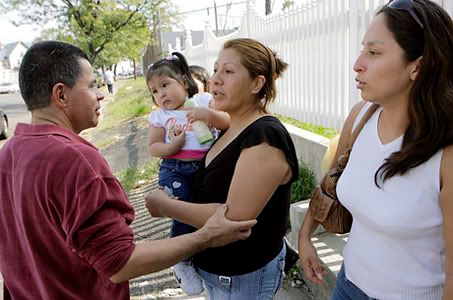
Scott Lituchy/The Star-LedgerWorkers who were laid off console each other outside Topps Meat Co.

"'This is tragic for all concerned," said Anthony D'Urso, chief operating officer. "In one week we have gone from the largest U.S. manufacturer of frozen hamburgers to a company that cannot overcome the economic reality of a recall this large. We sincerely regret the impact this will have on our employees, our customers and suppliers, and the community. Most of all, we regret that our products have been linked by public health agencies to recently reported illnesses. We hope and pray for the full recovery of those individuals."

The skeleton crew of workers will remain at the Elizabeth plant to assist U.S. Department of Agriculture officials in their ongoing investigation of the tainted beef recall. USDA officials said yesterday the company had to recall a year's worth of beef product because of improper documentation.

Scott Lituchy/The Star-LedgerAs worker sits in her car and cries after Topps Meat Co. closes down and lays off 77 people today.

"We want to thank our loyal employees and customers who have supported us throughout the 67 years in which Topps Meat has been in business," D'Urso said. "Topps has always prided itself on providing the utmost quality and safety and never had a recall in our history until now. This has been a shocking and sobering experience for everyone."

Topps Meat was founded in 1940 and is a leading manufacturer and supplier of frozen hamburgers and fresh cut steaks.

Voluntary regulation, trusting Big Business to do the right thing because it's the right thing to do just doesn't work.

Wednesday, June 06, 2007

Too Little, Too Late?

China to Revise Food and Drug Safety Rules


The NYT reports:
Responding to growing international concerns about tainted food and counterfeit drugs, China said late Tuesday that it was overhauling its food and drug safety regulations and would introduce nationwide inspections.

The announcement, from the State Council, the nation’s highest administrative body, is the strongest signal yet that Beijing is moving to crack down on the sale of dangerous food and medicine and also trying to calm fears that some of its exports pose health problems.

The move follows a series of embarrassing episodes this year involving China’s export of contaminated pet food ingredients and toothpaste. The shipments of tainted pet food ingredients set off one of the largest pet food recalls in United States history.
Last month, an article in The New York Times revealed that at least 100 people had died in Panama after taking medicine containing a toxic chemical called diethylene glycol that had been produced in China and exported as the harmless syrup glycerine.

And in recent weeks, several countries, including the United States, Panama and Nicaragua, recalled or issued warnings about toothpaste made in China because it contained diethylene glycol.

While Beijing has strongly defended the quality and safety of its food and drug exports, and even denied that toothpaste it exported was unsafe, government regulators at the same time have stepped up safety inspections and shut down companies accused of producing unsafe food or counterfeit drugs.

But with pressure growing from regulators in the United States, Europe and other parts of the world, and international food companies expressing concern about the risks of importing Chinese-made food and feed ingredients, Beijing is pushing for a more forceful response to the crisis.

In its announcement on Tuesday, which was posted on a government Web site, China said that the state council had approved a new food and drug safety guarantee system on April 17 and that an outline of the new program was being distributed to government agencies nationwide.

The government said in its announcement that it planned by 2010 to place new controls on food and drug imports and exports, to step up random testing on medicines and have inspection information on 90 percent of all food products.

It said it also planned safety checks on a large majority of food makers and said that regulators would crack down on the sale of counterfeit drugs and medical devices.

The government did not indicate whether it would provide more funds for the efforts or which agencies would carry out the bulk of the functions.

But in announcing the new measures, the government hinted at its weaknesses in enforcement, saying that after five years one goal was that “100 percent of the significant food safety accidents are investigated and dealt with” and that “80 percent of the food that needs to be recalled is recalled.”

A few weeks ago, the government had announced that it was planning to set up a food recall system.

On Tuesday, the General Administration of Quality Supervision, Inspection and Quarantine, which oversees food and drug exports, also posted statements on its Web site about the issue.

“Recently, our country has had a series of export food problems, and that has triggered a lot of overseas attention about China’s food safety,” said Wei Chuanzhong, deputy director of the agency. “This has put us on high alert, and led us to seriously look into the reasons for the problem.”

Food and drug safety experts have complained for years about an incredibly flawed system that has led to food scares or mass poisonings tied to counterfeit or substandard medicines on the market.

Much of the blame has centered on weak enforcement of the nation’s food and drug regulations, as well as corruption, bribery and a business culture where counterfeiting thrives.

China’s food and drug administration, which is supposed to safeguard the nation’s health, has also been implicated.

Last week, a Chinese court handed down a death sentence against Zheng Xiaoyu, the head of the Food and Drug Administration in China from 1998 to 2005, after he pleaded guilty to bribery and corruption. The government also said that he took bribes to approve drug production licenses and that it was reviewing production licenses the agency had issued.

Some experts say the new food and drug safety program suggests that the nation’s top leaders are taking up the call for reforms and new enforcement measures.

“There’s been concern for a while about food safety in this country, and now that there are growing concerns about China’s international image, the state council has decided to act,” said Russell Leigh Moses, an analyst of Chinese politics who is based in Beijing. “This may be a sign that everyone in the government ought to get in line.”

But the challenges facing China are enormous because its regulatory system is weak and enforcement is particularly difficult, partly because the economy is growing so fast and also because local officials accept bribes and sometimes allow small companies to flout regulations.

Also, regulators here say many exporters of food and medicines are mislabeling goods and shipping them illegally.

Two weeks ago, food and drug safety issues were even on the table in Washington during the strategic economic dialogue hosted by Treasury Secretary Henry M. Paulson Jr.

“These are issues China has to deal with over time,” says Rio D. Praaning, secretary general of the Public Advice International Foundation in Belgium, an advisory group that is working on food and drug safety issues around the world. “But we can’t wait. We have interim developments. We have patience, but frankly patience is out the window when people start dying.”

If Democrats really were liberals, and not deregulation-embracing moderate Republicans, they would be using stories like these to teach the American people what good government is all about and what our tax dollars pay for.

It will take China decades before they have in place the food and drug safety inspections that the U.S. had in place before Conservatives took it into their heads to dismantle U.S. government agencies and do away with regulations requiring safety measures and inspections of our food and drug industries. Until then (and until we sweep Republicans out of government and until liberals regain control over the Democratic party), we will dice with death every time we swallow food or medications. That goes for our pets, too.