Showing posts with label worthless media. Show all posts

Wednesday, May 07, 2008

Another Notch On Hillary's Belt of Lies & Deception

Once again, Hillary Clinton demonstrates she is a stranger to truth.


If Hillary Clinton believes that hers is an honest representation and assessment, her fitness for the job of President of the U.S. needs to be questioned.

Kathy Kiely and Jill Lawrence interviewed Hillary Clinton for USA Today:
Hillary Rodham Clinton vowed Wednesday to continue her quest for the Democratic nomination, arguing she would be the stronger nominee because she appeals to a wider coalition of voters — including whites who have not supported Barack Obama in recent contests.

"I have a much broader base to build a winning coalition on," she said in an interview with USA TODAY. As evidence, Clinton cited an Associated Press article "that found how Sen. Obama's support among working, hard-working Americans, white Americans, is weakening again, and how whites in both states who had not completed college were supporting me."

"There's a pattern emerging here," she said.
Clinton's blunt remarks about race came a day after primaries in Indiana and North Carolina dealt symbolic and mathematical blows to her White House ambitions.

The Obama campaign, looking toward locking up the nomination, stepped up pressure on superdelegates who have the decisive votes in their race.

In both states, Clinton won six of 10 white voters, according to surveys of people as they left polling places.

Obama spokesman Bill Burton said that in Indiana, Obama split working-class voters with Clinton and won a higher percentage of white voters than in Ohio in March. He said Obama will be the strongest nominee because he appeals "to Americans from every background and all walks of life. These statements from Sen. Clinton are not true and frankly disappointing."

Clinton rejected any idea that her emphasis on white voters could be interpreted as racially divisive. "These are the people you have to win if you're a Democrat in sufficient numbers to actually win the election. Everybody knows that."

Larry Sabato, head of the University of Virginia Center for Politics, said Clinton's comment was a "poorly worded" variation on the way analysts have been "slicing and dicing the vote in racial terms."

However, he said her primary support doesn't prove she's more electable. Either Democrat will get "the vast majority" of the other's primary election votes in a general election, he said.

Clinton lost North Carolina by 14 percentage points and won Indiana by 2 points after competing full-out in both states. She had loaned the campaign $6.4 million in the past month. She said she might lend more.

"We should finish the contests we have and see where we stand after they're over," she said, referring to the six remaining primaries that will end June 3.

There were signs of unrest Wednesday, even among Clinton allies. California Sen. Dianne Feinstein wondered to The Hill, a Capitol Hill newspaper, "whether she can get the delegates that she needs." Former South Dakota senator George McGovern, whose 1972 presidential bid gave Clinton her first political experience, switched his support from Clinton to Obama.
Can you spot Hillary Clinton's deception in the May 4, 2008 AP article she was citing?:
Barack Obama's problem winning votes from working-class whites is showing no sign of going away, and their impression of him is getting worse.

Those are ominous signals as he hopes for strong performances in the coming week in Indiana and North Carolina primaries that would derail the candidacy of Hillary Rodham Clinton, his rival for the Democratic presidential nomination. Those contests come as his candidacy has been rocked by renewed attention to his volatile former pastor, the Rev. Jeremiah Wright, and by his defeat in last month's Pennsylvania primary.

In an Associated Press-Yahoo News poll in April, 53 percent of whites who have not completed college viewed Obama unfavorably, up a dozen percentage points from November. During that period, the numbers viewing Clinton and Republican candidate John McCain negatively have stayed about even.

Huge preference for Clinton

The April poll — conducted before the Pennsylvania contest — also showed an overwhelming preference for Clinton over Obama among working-class whites. They favored her over him by 39 percentage points, compared to a 10-point Obama lead among white college graduates. Obama also did worse than Clinton among those less-educated voters when matched up against Republican candidate John McCain.

"It's the stuff about his preacher ... and the thing he said about Pennsylvania towns, how they turn to religion," Keith Wolfe, 41, a supermarket food stocker from Parkville, Md., said in a follow-up interview. "I don't think he'd be a really good leader."

Just before the Pennsylvania primary, Obama said many small-town residents are bitter about their lives and turn for solace to religion and guns.

Recent voting patterns underscore Obama's continued poor performance with these voters, who are often pivotal in general election swing states like Florida, Ohio and Pennsylvania.

In Democratic primaries held on or before Super Tuesday, Feb. 5, whites who have not finished college favored the New York senator by a cumulative 59 percent to 32 percent, according to exit polls of voters conducted for The Associated Press and the television networks.

In primaries since Feb. 5, that group has favored Clinton by 64 percent to 34 percent. That includes Ohio and Pennsylvania, in which working-class whites have favored Clinton by 44 and 41 percentage points respectively.

The AP-Yahoo poll shows less educated whites present a problem to Obama in part because of who they are. Besides being poorer, they tend to be older than white college graduates — and Clinton has done strongly with older white voters.

'Lacks content'

Yet political professionals and analysts say more is at play. They blame Obama's problems with blue-collar whites on their greater reluctance to embrace his bid to become the first black president, and his failure to address their concerns about job losses and the battered economy specifically enough.

Terry Madonna, a political science professor at Franklin & Marshall College in Lancaster, Pa., said Obama lost among working-class whites in the state because his message of how this generation's time has come did not address their economic needs.

"While it's incredibly motivating and passionate and compelling, it lacks content," Madonna said. "Hillary would come in and relate to them, talk about the specifics of her policy."

Pennsylvania also illustrated the problems racial attitudes among less educated whites are causing Obama.

In exit polls, one in five of the state's white voters who haven't completed college said race was an important factor in choosing a candidate, about double the number of white college graduates who said so. Eight in 10 of them voted for Clinton over Obama, and only about half said they would vote for Obama over McCain in November.

"The scab is peeled back off," Democratic pollster John Anzalone, not working for either presidential candidate, said of the latest attention focused on Wright and Obama's denunciations of him. In video clips of past sermons, Wright has damned the United States for its history of racism and accused the government of spreading the HIV virus to harm blacks.

Obama pollster Cornell Belcher said that while working-class whites have favored Clinton, the fact that huge numbers of them and other voters have participated in Democratic contests boded well for the November election.

"I don't think there's going to be erosion in the fall of a core group of Democratic voters," Belcher said.

While less educated whites tend to vote less frequently than better educated voters, they are important because of their sheer number.

Exit polls show they have comprised three in 10 voters in Democratic contests so far, a group that cannot be ignored in a contest that has seen Obama maintain a slim lead. They made up 43 percent of all voters in the 2004 presidential contest, when they heavily favored President Bush over Democrat John Kerry.

Underlining his need to connect with these voters, Obama has geared some television ads in Indiana toward economic issues. In recent days he has turned to small events, rather than his trademark huge rallies, concentrating on the economy, including lunching with a blue-collar Indiana family while discussing their problems.

He has let cameras record him playing basketball in hopes of connecting with the passionate fans of the sport who populate Indiana and North Carolina.

The findings from the AP-Yahoo News poll are from interviews with 863 Democrats on a panel of adults questioned in November and April. It has a margin of sampling error of plus or minus 3.3 percentage points.

The poll was conducted over the Internet by Knowledge Networks, which initially contacted people using traditional telephone polling methods and followed with online interviews. People chosen for the study who had no Internet access were given it free.

The exit poll is based on in-person interviews with more than 36,000 voters in 28 states that have held primaries this year in which both candidates actively competed. The margin of sampling error is plus or minus 1 percentage point, larger for some subgroups.
Setting aside some serious reservations about the methodology of this poll, it's more than a month old, and it was done before the Pennsylvania primary. Hillary Clinton makes these remarks citing this poll weeks after the Pennsylvania poll, after the Indiana and N. Carolina primaries which she lost.

Monday, May 05, 2008

Did He Really Say That?

Another Example of How The Media is Complicit in Helping Those in Power Manipulate, Ever So Subtly, the Collective Consciousness of the Masses


On Hardball with Chris Matthews, Chuck Todd's characterization of Michelle Obama's reasons for this being the one and only time Barack Obama would run for the presidency:


Chuck Todd's rendition is not exactly what Michelle Obama said. From Vanity Fair:
But Mrs. Obama has no interest in an ongoing quest for the White House. “To me, it’s now or never,” she tells me a few days later, in Chicago, where we’ve met up again at the campaign’s Michigan Avenue headquarters. “We’re not going to keep running and running and running, because at some point you do get the life beaten out of you. It hasn’t been beaten out of us yet. We need to be in there now, while we’re still fresh and open and fearless and bold. You lose some of that over time. Barack is not cautious yet; he’s ready to change the world, and we need that. So if we’re going to be cautious, I’d rather let somebody else do it, because that’s a big investment of time, just to do it the same way. There’s an inconvenience factor there, and if we’re going to uproot our lives, then let’s hopefully make a real big dent in what it means to be president of the United States.”

And what it means to Mrs. Obama is sacrificing many of the things she holds most dear, in favor of a larger goal. Although she has concluded that this mission is worth what it takes, achieving such acceptance has been difficult, and the adjustments are ongoing.

On the campaign trail in Connecticut, the NY Times reports:
Michelle Obama told a group of supporters today not to assume that her husband, Barack Obama, would return for another try at the White House, or be any more appealing as a candidate later, if this bid falls short. “It’s not a threat,’’ she said. “It’s the reality.’’

Speaking to five sympathetic women at a Stamford diner who had been hand-picked by her campaign, Mrs. Obama described some ways that youth had its advantages. “This is the only time we will have a chance to have someone who is three years from paying off his student debt,’’ she said, “and still going to Target to get toilet paper.’’

Time spent in Washington, engaging with special interests, she noted, does not always help politicians stay in touch with working-class people or their problems. “Realistically, you get more isolated,’’ she continued.

“I don’t know if things would be the same in four years, and why wait?’’ she declared.

Mrs. Obama also expressed some concern about the impact another campaign of this type might have on her daughters. “People say: ‘We like you. Do this in four years.’ Easy for you to say. But what about those two kids who have already not seen their dad much this year?’’

At times, the conversation, monitored by dozens of reporters with cameras and pads straining to hear every word, felt like an episode from the television show “The View” — women sitting around a table dishing about their home lives and their struggles, except not once in the hourlong conversation was there any evidence of nastiness.

Mrs. Obama said she was skeptical of many of the arguments behind waiting for another round. “For Americans to say, ‘Now we’re ready for you, Barack,’ it doesn’t always work that way. Wait until he’s spent more years in Washington and he’s farther away from folks? Wait till he’s made more money? Wait for what?’’

Her listeners mostly agreed. “They want him tied up in the machine,’’ said Alexis Mitchell, a 59-year-old family therapist from South Windsor. Before the event, she had said she was in Mr. Obama’s camp because she liked the “grace he exhibits, especially under pressure’’ and appreciated his background as a community organizer.

While she voted for Bill Clinton for president, she said she was dismayed by the tone of his wife’s campaign. “I have not liked the way she bared her claws and exhibited her nasty side, saying she will dig up stuff on Barack,’’ Ms. Mitchell said.

Once Mrs. Obama arrived, she wasted little time complimenting her five companions on how great they each looked, especially Meredith Olmstead, a Darien homemaker who announced that she was expecting another child.

To Taiwo Stanback, a 24-year-old Yale University graduate who said she was juggling side jobs since her position at a New Haven nonprofit group lost financing, Mrs. Obama joked: “Oh, no you can’t do three jobs? You’re not industrious enough.’’

Trying to connect to a group that ranged in age from 24 to 59, Mrs. Obama referred to her own experience after school. “So much of what you’ve said, I’ve been there,” she said. “After my law degree I wanted to go into nonprofits, but the cost of loans from all these wonderful degrees I had made it very difficult.’’

“Barack and I just paid off our college loans three years ago,’’ she said.
Todd's emphasis on Michelle Obama's expectation of "wealth", instead of the isolation from ordinary Americans that is the life of a politician in Washington is harsh and not accurate. By suggesting Michelle Obama is preoccupied with riches ("wealth"), Chuck Todd helped the Clintons anchor a question planted by their campaign rhetoric about the Obamas' character and commitment to public service: That "Barack Obama is an elitist (even if he doesn't have money now) who is out of step with our (the Clintons' and blue collar voters') concerns."

What is significant in Todd's mischaracterization is, most politicians who have no wealth before entering public service (who are not self-made or rich through inheritance) don't get wealthy until they leave government and make good on the networking and contacts they've made from over their years of service. That is, if they get wealthy at all. If you don't have money before you get to Washington, serving in Congress can be a risky proposition, character building, because of the expense of having to maintain two homes (in your home district and in Washington, D.C.), with two sets of everything and overlapping services (furniture, cable tv, newspaper services, monthly utility bills with basic monthly fees whether you're there or not), and travel expenses back and forth to your home district.

I don't think Chuck Todd is part of any grand conspiracy, but I do think that healthy distance and boundaries between the fourth estate and the people they are covering in government have all but eroded. When lobbyists are literally sitting in offices at the White House and on the Hill writing legislation, and Scooter Libby is calling executives at NBC to complain about the coverage they're getting, and the media attends spin sessions after debates, and basically takes dictation from campaign surrogates like Terry McAuliffe and Howard Wolfson, the fourth estate is no longer an impartial chronicler to be trusted.

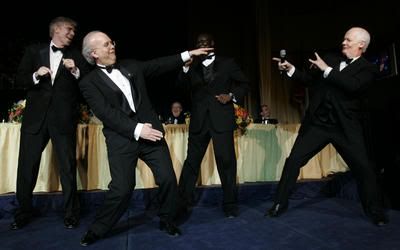
MSNBC's David Gregory and Ken Strickland dance with Karl Rove and a Rove impersonator

Wednesday, January 16, 2008

John McCain Cheated On His Sixth Grade Math Test??!??

Who knows, but you'll get it in a minute . . . .

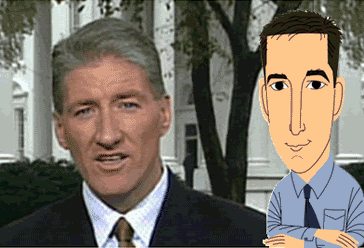
John King and Glenn Greenwald

At Salon.com, Glenn Greenwald writes:
Over the weekend, I wrote about an adulating interview which CNN's John King conducted with John McCain while riding on the storied Straight Talk Express bus. The interview was broadcast on "Situation Room" with Wolf Blitzer. In that post, I printed all of the "questions" King asked of McCain in their full, unedited entirety as broadcast on CNN, linked to the full transcript of the program, and then added some commentary.

Yesterday, I received a response from King via e-mail, the authenticity of which was confirmed in a subsequent exchange:

From: King, John C
To: GGreenwald@salon.com
Sent: Tuesday, January 15, 2008 5:40 PM
Subject: excuse me?

I don't read biased uninformed drivel so I'm a little late to the game.
But a friend who understands how my business works and knows a little something about my 20 plus years in it sent me the link to your ramblings.

Since the site suggests you have law training, maybe you forgot that good lawyers to a little research before they spit out words.

Did you think to ask me or anyone who works with me whether that was the entire interview? No. (It was not; just a portion used by one of the many CNN programs.)
Did you reach out to ask the purpose of that specific interview? No.

Or how it might have fit in with other questions being asked of other candidates that day? No.

Or anything that might have put facts or context or fairness into your critique. No.
McCain, for better or worse, is a very accessible candidate. If you did a little research (there he goes with that word again) you would find I have had my share of contentious moments with him over the years.

But because of that accessibility, you don't have to go into every interview asking him about the time he cheated on his sixth grade math test.

The interview was mainly to get a couple of questions to him on his thoughts on the role of government when the economy is teetering on the edge of recession, in conjunction with similar questions being put to several of the other candidates.

The portion you cited was aired by one of our programs -- so by all means it is fair game for whatever "analysis" you care to apply to it using your right of free speech and your lack of any journalistic standards or fact checking or just plain basic curiosity.

You clearly know very little about journalism. But credibility matters. It is what allows you to cover six presidential campaigns and be viewed as fair and respectful, while perhaps a little cranky, but Democrats and Republicans alike. When I am writing something that calls someone's credibility into question, I pick up the phone and give them a chance to give their side, or perspective.

That way, even on days that I don't consider my best, or anywhere close, I can look myself in the mirror and know I tried to be fair and didn't call into question someone's credibility just for sport, or because I like seeing my name on a website or my face on TV.


During our subsequent exchange, when I pointed out that this was not the first time he appeared to be reverent of John McCain, as documented by Media Matters, he said: "Go to its conservative counterpart and you will find me there, too. Comes with the territory."

Most of this speaks for itself, but it's worth noting how often journalists' responses to criticisms contain so many of the same elements which King's email contains. They always want you to know that they never read what you write and that you're an Unserious, biased, partisan amateur (without any recognition of the glaring contradiction between those two claims).

They boast of what they believe to be their reputation, assuring you that they are widely respected and admired by the People Who Count. Even though they never read you, they're repulsed by the idea that you would dare to critique their work because you know absolutely nothing about the High Art of Journalism and never get any messages on your Blackberry from Ed Gillespie or Karl Rove or Anyone.

They invariably point to criticisms from both Left and Right as proof that they're unbiased straight-shooters. They chide you for being unaware of the secret, concealed information (interview questions that weren't broadcast, paragraphs that were edited out) which somehow disproves your critique of what they did broadcast or publish.

They proudly inform you that there have, indeed, been some instances over the many decades that they've been working when they've stood up to someone and asked something other than mindlessly reverent questions, and if you had looked hard enough, you might have found a couple. They tell you it's appalling to comment on what they publish to their readers or viewers without first talking to them about it, even though you linked to or even printed in full everything they said and wrote. And they close by telling you that you have no standards, no ethics, no understanding of their Complex Profession, and no decency -- that you're just a shrill, ignorant partisan pushing a lowly agenda while they are in the business of Real Unvarnished, Objective Reporting.

Ponder how much better things would be if establishment journalists -- in response to being endlessly lied to and manipulated by political officials and upon witnessing extreme lawbreaking and corruption at the highest levels of our government -- were able to muster just a tiny fraction of the high dudgeon, petulant offense, and melodramatic outrage that comes pouring forth whenever their "reporting" is criticized. All this energized invective from King because CNN aired an "interview" with the GOP front-running presidential candidate consisting of one adoring question after the next, which I printed in full.

It's not exactly a secret that the traveling press harbors bountiful, blinding love for John McCain. That love was glaringly evident in King's "interview." Judging by his response, King quite clearly knows this, too. It's not actually that complicated. The next time you or your colleagues interview McCain, keep your affection to yourself; skip the part where you lavish him with praise; exercise journalistic skepticism; and just ask real questions.

-- Glenn Greenwald
Here we have yet another journalist with a mainstream media outlet who believes that if both the left and the right complain, he must be doing a good job.

I can't think of any other profession where the measure for how well you're doing your job is by the number of dissatisfied customers you are creating.

Wednesday, October 10, 2007

The Discount War

ISAF Is Failing in Effort to Secure Afghanistan on the Cheap


Der Spiegel reports:
Germany's parliament votes this Friday on whether to extend Berlin's participation in the military mission in Afghanistan. The country is on the brink of disaster, but German politicians have chosen to ignore Afghanistan's real problems.

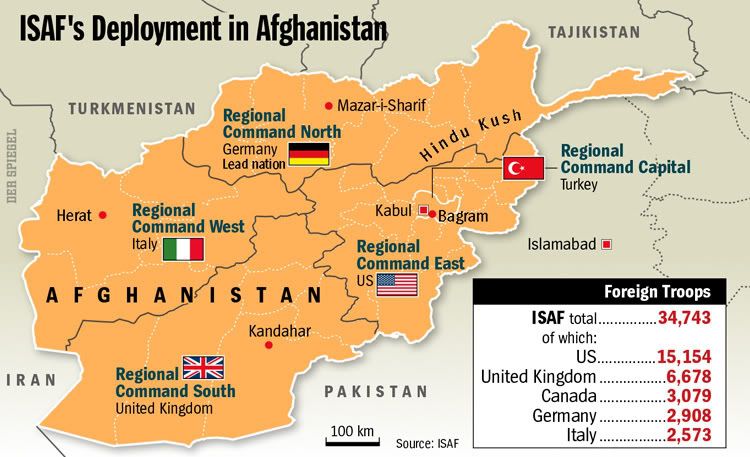
Italian Brigadier General Fausto Macor is the ideal star witness to make the situation in Afghanistan dramatically clear to German politicians. The wiry general from the northern Italian city of Turin has been in charge of the Regional Command West of the NATO-led International Security Assistance Force (ISAF) in Afghanistan since July. He and his men are deployed in what is considered the quietest and safest part of the country.
Macor and his men are barricaded into an area near the airport in Herat, an old trading city of 250,000 inhabitants that has long served as a gateway to nearby Iran. Heavily armed Albanian soldiers guard the entrance to the camp, which is protected against enemy fire by a 1-meter-thick wall of boulders.

On Tuesday of last week, the general met with Eckart von Klaeden, the foreign policy spokesman of Germany's Christian Democratic Union (CDU). Von Klaeden had traveled to the city with the German ambassador to Afghanistan, Hans-Ulrich Seidt.

The general is slightly delayed, having attended a memorial service for two Spanish soldiers who were killed the day before in a bomb attack 80 kilometers (50 miles) to the south. The service was broadcast live on Italian television to a distressed nation. NATO troops have just liberated two kidnapped Italian intelligence officers from Macor's contingent. One of the Italians suffered serious injuries during the raid.

The commander sits in a chair, his back to the television set, and points to a military map on the wall. "You see," he says, "I am responsible for an area half the size of Italy." Then he rattles off the relevant statistics. Of the 1,800 soldiers under his command, only 270 can go on patrol. If he sends two units out on patrol, they can easily find themselves operating 400 kilometers (249 miles) apart. "It's as if one of them were in Turin and the other in Venice," says the general.

He can expect little support from the Afghan army, which has only 400 armed troops in the western sector. As a result, the general is left to his own resources as far as entire regions are concerned. He has no illusions. There is no power vacuum in Afghanistan: Taliban fundamentalists, armed tribal warlords or criminal gangs control the areas where there are no international troops.

In fact, the rule of law ends only a few hundred meters from Macor's headquarters, where the commander of the Herat airport complains about his situation. Outside, the warm late autumn sun shines on the Italians' gray Hercules transport aircraft. The mustachioed police colonel keeps his office cooled to a chilly 19 degrees Celsius (61 degrees Fahrenheit). The law requires that no armed soldiers be allowed on the airport grounds. The police colonel complains that his men, armed with only 30 old Kalashnikov automatic rifles, are poorly equipped to uphold the law at the airport.

This isn't nearly enough firepower to deter the city's powerful men, who often appear on the tarmac with scores of bodyguards armed with pistols, rifles and mobile grenade launchers. In front of the parked aircraft, rival private armies occasionally engage in violent gun battles, while the airport commander's men are forced to look on helplessly.

Welcome to Afghanistan in the sixth year following the Western intervention. Welcome to a country that ranks, sadly, in eighth place in the 2007 edition of the "Failed States Index" compiled by the US magazine Foreign Policy -- just behind Sudan, Iraq, Somalia and Zimbabwe. Welcome to Afghanistan, the country NATO Secretary General Jaap de Hoop Scheffer has proclaimed a test case for the future operability of the world's most powerful military alliance.

A troop withdrawal would be a "serious defeat for international law and the international community," warns Peter Struck, the floor leader of Germany's Social Democratic Party (SPD), while German Chancellor Angela Merkel believes that her country's commitment to the operation in Afghanistan is "the only way to demonstrate that we fight terrorists, and that we do so with great resolve." Welcome to one of the most controversial issues in German foreign policy.

This Friday, Germany's parliament, the Bundestag, will vote on whether to extend two of the three German military mandates in Afghanistan, currently the Bundeswehr's most dangerous mission. Twenty-one German soldiers have already lost their lives in Afghanistan, and last Friday three Germans were lucky to escape from a suicide attack with only minor injuries. The Bundestag will decide the fate of up to 3,500 soldiers and six Tornado reconnaissance aircraft operating in Afghanistan under the auspices of NATO's ISAF force.

Parliament's approval of the mission is considered a done deal, with a broad majority in both the ruling grand coalition and the liberal Free Democratic Party (FDP) likely to vote in favor of keeping the troops in Afghanistan. Even a number of Green parliamentarians intend to support the measure, despite the party's recent decision not to. Only the Left Party is strictly opposed to the Bundeswehr's Afghanistan mission.

The future of Germany's more controversial involvement in the US-led antiterrorism Operation Enduring Freedom (OEF) will not be decided until November, after the SPD convention in Hamburg.

Part 2: An Unpopular Issue

Relatively few members of parliament have traveled to Afghanistan in recent months to get a first-hand impression of the situation in the war-torn country, despite the fact that members of the German Bundestag are normally known for their love of travel. Apparently only very few of Germany's elected representatives feel that Afghanistan is worth a visit.

The ones who choose to stay at home are acutely aware of why they do not want to be associated with the country. The mood among the German public has changed dramatically since the grand coalition took office two years ago. Whereas 60 percent of poll respondents approved of the Bundeswehr's Afghanistan mission in the past, considerably more than half are openly pushing for a withdrawal today.

Although officials at the Chancellery insist that the country is at the top of the chancellor's agenda, Angela Merkel studiously avoids being tainted by unpopular issues like Afghanistan. She expresses her support for Germany's commitment to the shattered country from time to time, perhaps out of a sense of duty, but she has already withdrawn to the sidelines of the debate.

Her predecessor, former Chancellor Gerhard Schröder, made two trips to the crisis-plagued region. Photo ops from Afghanistan were still considered desirable at the time. Merkel, on the other hand, prefers being portrayed as a climate change crusader, posing for the cameras in front of a glacier in Greenland or visiting a school in Ethiopia. But she has yet to make an appearance in Afghanistan. There have been many excuses for her apparent decision to shun the country, ranging from kidnappings to SPD conventions to a busy schedule.

The news that reaches Berlin from Afghanistan these days is simply too horrific. Members of parliament who have visited the country describe a place on the verge of collapse. Instead of declining, the problems of poverty, corruption, violence and sheer hopelessness are on the rise. Government institutions are virtually nonexistent in many parts of the country, the police are corrupt and overworked and the military isn't in much better shape. The effects of Western development aid go largely unnoticed by much of the population.

The security situation is also becoming more and more precarious. More than 5,000 people were killed in attacks or combat during the first nine months of this year alone. According to a United Nations report, acts of violence have increased by close to 30 percent this year. Three-quarters of the attacks are directed against Afghan soldiers, police officers and foreign troops, "in a deliberate and calculated effort to impede the establishment of legitimate government institutions," the UN report states.

The situation on the military front is unclear. In a Sep. 18 classified report labeled "Urgent" to the governments of European Union member states, the EU's special envoy in Kabul, Spain's Francesc Vendrell, identifies a "paradoxical trend." "While ISAF is achieving significant military successes against the insurgents, especially as a result of targeted attacks on Taliban commanders," Vendrell writes, "the unsafe zone in which the insurgents operate is growing." Even a weak Taliban presence is sufficient, Vendrell continues, to bring "normal government activities to an end" and to bring large segments of the population under the influence of the insurgents.

Vendrell's conclusions coincide with the results of a study by the Senlis Council, an international think tank, which conducted a survey in March of 12,000 Afghan men in the southern and eastern sections of the country, regions which have seen fierce fighting. The study's conclusions were devastating. In late 2001, the vast majority of Afghans believed that the Taliban had been defeated once and for all. Today only half of those surveyed are convinced that international forces will win the war against the insurgents in southern Afghanistan. It appears that although the Taliban is unlikely to win the war militarily, it is increasingly emerging victorious in the battle for public opinion.

The loss of confidence in and respect for the international community has political consequences. EU envoy Vendrell reports, with some concern, on a written memo from the Afghan interior minister to all provincial governors and police commanders, in which they were instructed to refrain from visiting international aid organizations and civilian and military reconstruction teams in the future.

Although the consequences of the order would not be significant in practice, writes Vendrell, many of his Afghan contacts are concerned about the impression it conveys, namely that the level of trust between the government and the international community is declining. They also fear that "officials with connections to organized crime could gather incriminating material against non-corrupt officials because of harmless contacts."

There is an odd disparity between the reality in Afghanistan and the political debate in Germany. Seemingly oblivious to the information coming from the country, both the Bundestag and the political parties become embroiled in heated debates over technical details that are in fact irrelevant in Afghanistan. The Green Party and the SPD, in particular, spent weeks in an enthusiastic debate about OEF, ISAF and the Tornado jets.

For many Greens and Social Democrats, the OEF anti-terrorism operation is the epitome of a merciless US-led bombing war that they claim is practically driving Afghans into the arms of the Taliban. At the Green Party convention in the central German city of Göttingen, the party base decided that it would no longer vote in favor of extending the Bundeswehr's Afghanistan mission. The SPD's leadership has scheduled the discussion of Afghanistan at its upcoming convention in Hamburg in late October for Saturday evening, timed to coincide with the popular sports broadcast "Sportschau" -- apparently in an attempt to divert delegates' attention away from the debate over OEF and the ISAF.

The debates being conducted in Berlin are essentially ersatz discussions -- a not-uncommon tactic among German politicians. Last year, a swarm of self-proclaimed naval experts spent weeks debating the marginal issue of whether the German navy's deployment off the Lebanese coast should remain outside a three-mile or a six-mile zone.

Part 3: Redefining Goals

The important questions in the Afghanistan debate are also being ignored. For instance, how does one define success for the mission? Can a discount war -- one that is being waged with a relatively minimal financial commitment -- succeed in the long run? Shouldn't the West, including Germany, increase its commitment to the mission? Should its goals be redefined? Or is it enough to provide the Afghan people with electricity, running water and a little freedom of opinion?

At least some politicians -- those who focus on foreign affairs -- are offering clear answers to many of these questions. Foreign Minister Frank-Walter Steinmeier, for example, says that the goal in Afghanistan is, of course, not to establish a "Westminster democracy" with the corresponding benefits of a social welfare state. Christian Democratic parliamentarian Ruprecht Polenz, the chairman of the Bundestag's Committee on Foreign Affairs, consciously sets the bar low when he says: "The goal is to ensure that no more threats originate from within the Afghan state."

In truth, this objective would represent a dramatic reversal of German policy. In 2002, then Chancellor Schröder insisted that the Afghans ought to be compensated for their "return to the civilized world" by providing them with an adequate "prosperity dividend." The goal of the intervention, the Schröder administration explained, was to achieve human rights, democracy and prosperity for Afghanistan.

These noble objectives are rarely mentioned today. But which criteria must be fulfilled before the mission can be considered a success and the German troops and their allies can return home? No one knows. An exit strategy is "currently not in sight," says one German NATO general.

"We won't let the foreigners leave until our roads are built, our schools, electricity are built, until our police and army are better," Afghan President Hamid Karzai said recently. Some at NATO perceive this statement as a threat. "Our assistance ends," says German Defense Minister Franz Josef Jung, "when Afghanistan can find its way to a positive future on its own two feet."

"NATO will have successfully completed its mission when the Afghan government and its security forces can take responsibility throughout the entire country," NATO Secretary General Jaap de Hoop Scheffer told SPIEGEL in a recent interview (more...). But Scheffer is unwilling to make any predictions, except to say: "NATO will have to stay for the foreseeable future."

Faced with a difficult situation, the allies are now placing their hopes on the plan to train 70,000 soldiers and 82,000 police officers by the next parliamentary election, in three years. The new mantra of the NATO member states, says Scheffer, is "training, training, training." "Those who do not invest in training now," says German General Egon Ramms, who runs the ISAF mission from the NATO command center in the Dutch town of Brunssum, "will have to stay that much longer."

The Germans are eager to distance themselves from the United States in public debates, insisting that, unlike the Americans, the Germans are mainly involved in civilian reconstruction assistance. But this is precisely where Germany has failed miserably -- in developing the Afghan police force (more...), for example, for which Berlin has assumed primary responsibility. After visiting Afghanistan in the summer, a delegation of members of the Bundestag concluded that the work of the German contingent has been disastrous.

Germany, supposedly a "lead nation" in ISAF, has taken a leisurely approach to the Afghanistan effort. In January 2002, a team of high-ranking experts traveled to Afghanistan and recommended sending three German officials to Kabul to serve as advisors to the Afghan interior ministry. The German team, apparently convinced that this would be sufficient, envisioned the trio developing courses for senior bureaucrats and helping the Afghans improve their police academy. It recommended a one-year stint for the three officials. Aside from that, the experts concluded, the Afghans lacked equipment, cars and, most of all, weapons.

But weapons were precisely what the Afghans eventually acquired in abundance. It was an "absurdity," said FDP parliamentarian Elke Hoff, that Berlin planned to supply Afghanistan with up to 100,000 firearms while denying the Afghan police simple equipment like handcuffs. Germany's interior and foreign ministries refused to provide countries that fail to fully satisfy German constitutional standards with equipment designed to "exercise direct coercion."

This defect is only being remedied now -- a full five years after Germany launched its Afghan police training program. According to an internal report by the German foreign ministry, "500 officers of the Kabul riot police will soon be equipped with body armor, helmets, shields, gloves, batons and pepper spray."

Even when the German team of advisors was later expanded to include 60 officials, generally only 40 of them were actually at work at any one time. In the wake of this embarrassing staffing debacle, officials at the interior ministry and chancellery are now quietly examining the possibility of developing a permanent team of specially trained police officers, federal prosecutors and administrative experts that could quickly be deployed to failed states to deal with similar crises. But this is little more than a pipe dream at this point.

Besides, the Americans aren't interested in waiting for Germany to get its act together and have already taken over from the Germans in many respects. While Berlin agonized over the "further training of mid-level and senior officials" and "salary and rank reforms," Washington deployed 2,500 troops as police trainers, backed up with hundreds of contractors working for DynCorp, a private security firm.

Managed by retired US generals, the DynCorp employees are training illiterate Afghans to work as police deputies in paramilitary crash courses. Their goal is to ensure that the men will be passable marksmen by the end of the training. The fact that many desert as soon as they complete the courses is seen as an unpleasant fact of life -- but not as a blemish on DynCorp's training statistics.

Part 4: 'Like a Band-Aid on a Chest Wound'

In the wake of their failures, the Germans are now trying to shift the responsibility for police training to the EU and distribute it among more countries. In May the EU formed its own police training mission, dubbed EUPOL, which has been managed so far by Friedrich Eichele, a German police general. Eichele, the former head of GSG 9, the counterterrorism unit of the German federal police, is a man of few words. His command of the English language is rudimentary and his diplomatic skills are considered limited.

Given such leadership, within only a few months EUPOL has already deteriorated into a directionless tangle of bureaucracy and financial weakness. EUPOL's 195 EU police officers from 17 countries are not even scheduled to assume their new posts until next March. According to officials, this is the earliest possible date, since the group must first build new, and appropriately comfortable, lodgings for its officers.

All of two German police officers are currently assigned to assist the German reconstruction team in the provincial city of Kunduz, which includes more than 400 soldiers. EUPOL plans to replace the pair with five of its team members soon. The new team will be responsible for the training of 7,500 Afghan police officers in two provinces. In the face of such realities, Guido Westerwelle, the head of the FDP, couldn't help but comment sarcastically on the program while visiting Afghanistan two weeks ago: "Well, that certainly takes care of police development."

Despite the efforts of German and British advisors, the interior ministry in Kabul is considered a hotbed of corruption. It costs up to $150,000 in bribes to secure a position as a district police chief. But the investment is worthwhile. Once on the job, a police chief can easily recoup the money from his subordinates.

General Dan McNeill (more...), the American commander of ISAF, likes to entertain visitors to his headquarters in Kabul with small anecdotes from the everyday lives of the Afghan police. He recently instructed his Afghan underlings to set up 20 checkpoints along the road between Kabul and Kandahar. "Which police checkpoints?" a wide-eyed Afghan asked McNeill a few weeks after the initial order. "Oh," the Afghan quickly realized, "you mean the new tollbooths."

Wherever one looks in Afghanistan, officials are busy skimming off their cuts. In fact, police officers often exist only on paper. Local police chiefs line their pockets by collecting funds from the international community's coffers to pay the salaries of nonexistent officers. To add insult to injury, the officers that do exist are paid miserably to perform their life-threatening jobs. At the paltry salary of $70 a month, many police officers complete basic training and then promptly desert to join the private militias of wealthy warlords and drug barons, or even the Taliban. At $400 to $600 a month, the competition pays a lot more than the police.

The situation is hardly any better in the military. According to NATO statistics, 38,000 soldiers have already been trained with Western assistance, a process that will take years and is expected to eventually produce 70,000 soldiers. But these figures do not reflect the real situation.

Last Wednesday, for example, the US commander in charge of training gave a memorable performance at the NATO Council in Brussels. The NATO ambassadors attending the meeting asked Major General Robert Cone, who was in Kabul but was taking part in the session via videoconference, how many men in the Afghan army are now ready for combat.

The general responded that while the goal was to train 70,000 men, 50,000 are already being paid. But, he added, many of these men are simply AWOL ("absent without leave"). In other words, they are either deserters or men who occasionally choose to stay at home instead of appearing for duty. Besides, Cone added, he is having trouble retaining the men who have been trained. The actual force, he told the NATO officials, presumably consists of about 30,000 men, but he was unable to provide them with a more precise figure.

But the ambassadors were insistent. How many of those men are ready for combat? "I really can't say," the general said. Finally he admitted the truth: "To be perfectly honest -- zero."

In fact, Cone continued, not a single Afghan unit is capable of independently running an operation. According to Cone, the Afghan military lacks everything from artillery to helicopters, military hospitals, reconnaissance equipment and support personnel.

This explains why Afghan Defense Minister Abdul Rahim Wardak tells every Western visitor that what he needs most are weapons. A few Leopard 1 tanks would be nice, the portly general told CDU parliamentarian von Klaeden two weeks ago in an effort to solicit more German support, but the modern Leopard 2 wouldn't be so bad, either.

For NATO officers, Wardak's tank fantasies are nothing short of ridiculous. The general, they complain, only wants the expensive combat machinery so that he can stage an impressive military parade. Besides, they add, experience has shown that most Western weapons deliveries to the Afghan army quickly end up on the black market.

The results of the international community's reconstruction efforts have been so sobering that many, including Foreign Minister Steinmeier, are calling for a rethink of Germany's commitment in Afghanistan. Berlin cannot afford to continue its current policy, he explained in the summer. He called for a stronger German commitment, saying that more troops, more police officers and more development aid are necessary.

But such calls for action have done nothing to change the situation. The state of the police training effort remains miserable, while Defense Minister Jung is obstructing efforts to increase the Bundeswehr contingent from 4,000 to 5,000 men -- a move both the Foreign Ministry and the Chancellery have endorsed. The team of 400 military trainers Steinmeier wants to see sent to Afghanistan will likely be reduced to no more than 180. But he does see progress in reconstruction aid: The German government has increased its annual funding of the program from €80 million to €125 million.

For Bruce Riedel, a member of the National Security Council at the White House until 2002, all of these efforts, including those of other Western nations, are a disgrace. "We have tried to rebuild a country devastated by a quarter century of wars, invasion and terror on the cheap," he said in a recent interview. "Instead of a massive economic reconstruction effort akin to the Marshall Plan of the 1940s, Afghans have gotten less economic aid on a per capita basis than Haitians or Bosnians."

His verdict on the Bush administration's approach? "Like trying to put a Band-Aid on a chest wound."

And American media remains silent.

Friday, September 21, 2007

Have We Had Our Fill of This Asshole Yet?

What about this one?

Are we ready to stop being distracted?

Netanyahu Confirms Secret Attack on Syria:
Israel's opposition leader, Binyamin Netanyahu, has given the first confirmation from his country of a mysterious air strike on an unknown target deep in Syria earlier this month - fuelling frenzied speculation about exactly what happened.

The leader of the rightwing Likud party said he had given the prime minister, Ehud Olmert, his backing for the attack, which Damascus said took place on September 6. Before that, the Israeli government had enforced a news blackout on the story.
Asked during a TV interview, Mr Netanyahu said: "When a prime minister does something that is important and necessary to Israel's security ... I give my backing." He refused to give further details.

Syria protested to the UN about the "flagrant violation" of its airspace. Officials in Damascus have reported that their air defences forced Israeli F15 jets to flee, dropping "munitions" and fuel tanks in the desert near the Turkish border.

US and other officials have claimed that Israel hit Syrian targets that may have had links to North Korean nuclear arms - dismissed by Damascus as "a big lie".

Meanwhile, Mr Olmert last night confronted critics within his centrist Kadima party who fear he may concede too much to Palestinians, and urged them to seize an opportunity to make peace after 60 years of conflict. Mr Olmert said he would free more Palestinian prisoners as part of "measured gestures" toward President Mahmoud Abbas as they try to agree terms for a US-sponsored peace conference.

Tuesday, September 18, 2007

Top 25 Censored Stories of 2008

Project Censored's list is out:
#1 No Habeas Corpus for “Any Person"

#2 Bush Moves Toward Martial Law

#3 AFRICOM: US Military Control of Africa’s Resources

#4 Frenzy of Increasingly Destructive Trade Agreements

#5 Human Traffic Builds US Embassy in Iraq

#6 Operation FALCON Raids

#7 Behind Blackwater Inc.

#8 KIA: The US Neoliberal Invasion of India

#9 Privatization of America’s Infrastructure

#10 Vulture Funds Threaten Poor Nations’ Debt Relief

#11 The Scam of “Reconstruction” in Afghanistan

#12 Another Massacre in Haiti by UN Troops

#13 Immigrant Roundups to Gain Cheap Labor for US Corporate Giants

#14 Impunity for US War Criminals

#15 Toxic Exposure Can Be Transmitted to Future Generations on a “Second Genetic Code”

#16 No Hard Evidence Connecting Bin Laden to 9/11

#17 Drinking Water Contaminated by Military and Corporations

#18 Mexico’s Stolen Election

#19 People’s Movement Challenges Neoliberal Agenda

#20 Terror Act Against Animal Activists

#21 US Seeks WTO Immunity for Illegal Farm Payments

#22 North Invades Mexico

#23 Feinstein’s Conflict of Interest in Iraq

#24 Media Misquotes Threat From Iran’s President

#25 Who Will Profit from Native Energy?

Wednesday, September 12, 2007

U.S. Officials Confirm Israel Strike on Syria

Only in a parallel universe is Israel's act of aggression not considered an act of war.

Reuters reports:
U.S. officials on Wednesday confirmed Israel launched air strikes against Syria last week and said they were to target weapons Israel believes were headed for the militant group Hezbollah.

One defense official dismissed speculation Israel had aimed for any nuclear-related target. Two others said the target included weapons Israeli and U.S. officials have said Iran provides to Hezbollah through Syria.
"They saw a weapons flow," one official said, referring to weapons caches intended for Hezbollah, which fired thousands of rockets into Israel during a 36-day conflict last year.

It was still unclear whether Israel hit its targets in the September 6 air strikes.

Israel has declined comment on the strikes. Syria says the munitions dropped by Israel did no damage.

One U.S. defense official, speaking only on condition of anonymity, said the significance of the strikes was not whether Israel hit its targets, but rather that it displayed a willingness to take military action.

Syria has protested to the United Nations about the air strikes. On Wednesday, Syria's U.N. ambassador said Israel's motive was to torpedo peace moves.

SYRIA AT U.N.

"We think the Israeli purpose behind such an aggressive act is to torpedo the peace process, to torpedo the idea of holding an international conference," Syrian Ambassador Bashar Ja'afari told reporters.

Asked about Hezbollah's weapons, Ja'afari said, "This is blah, blah. This is nonsense, this is an unfounded statement. It is not up to the Israelis or anyone else to assess what we have in Syria."

"There was no target," he added. "They dropped their munitions. They were running away after they were confronted by our air defense."

Israeli public radio stations, which like all media in the country are under military censorship, led morning news bulletins with a New York Times report that U.S. officials had said Israel carried out the strikes -- and that U.S. officials believed Syria may have obtained nuclear material.

While some officials speculated that Syria and North Korea had opened some form of cooperation on nuclear weapons, other U.S. officials and former intelligence officials told Reuters that seemed unlikely and technically difficult.

A European diplomat speaking on condition of anonymity told Reuters satellite surveillance of an alleged nuclear site in Syria had been inconclusive due to poor weather. However, he said monitoring of this site would continue.

Israeli jets last struck in 2003 across a border that remains tense but quiet 34 years after the last war between the two neighbors ended in an edgy ceasefire. In June last year Syrian guns opened fire on Israeli aircraft over Syria.

Israel has urged Syria to stop supporting militant Palestinian groups and the Lebanese movement Hezbollah.

Some Israeli intelligence officials also have suggested Syria's government might be ready to try to take by force parts of the Golan Heights captured by Israel in the war of 1967.

Syrian officials have said Syria was seeking peaceful means to recover the Golan, although some also have suggested force remained an option if diplomacy failed. Israeli-Syrian peace efforts have been stalled for seven years.

And notice how the media went to black-out.

Thursday, September 06, 2007

Craig Decided Not To Seek Re-Election Before Scandal Broke

CNN reports:
Sen. Larry Craig had already decided not to seek re-election before revelations that he pleaded guilty to charges stemming from a Minnesota sex sting, two of the Idaho Republican's political advisers claimed Thursday.

Before news of his arrest became public last month, Craig told his former chief of staff and long time confidante Gregory Casey that he was not going to run for re-election in 2008, Casey told CNN.

"He and Suzanne had decided that he had been in Congress long enough, and it was time for him to go home," Casey said, referring to Craig's wife.

In a separate interview, Craig spokesman Dan Whiting also confirmed to CNN that Craig had already decided not to run for re-election, and originally planned to announce that publicly in September.

Neither Casey nor Whiting could say when that decision was made, but Whiting insisted it was "well before all of this broke."


Hmmm.

How long is "well before all this broke"? A month? Two? Before or after the arrest on June 8th?

How I long for a smart media, for journalists with a nose for news and can appreciate the wider implications of this story.

This goes to the heart of Craig's apparent retraction of his resignation, and the possibility that he's shilling for the Bush administration by providing them with a hot story to wipe General Petraeus's impending visit to Congress and the campaign Bush is waging to keep the war in Iraq going.

And, how is it that a U.S. senator was arrested for solicitation on June 8th, pleaded out on August 8th and the public doesn't learn about it until August 28th? And it wasn't a Minnesota (where the arrest was made) newspaper that broke the story, or an Idaho (Craig's home state) newspaper, but an inside-the-beltway, political insiders' publication, Roll Call. How did Roll Call learn of the arrest?
This disclosure comes as Craig's aides are trying to calm Republicans who are angry about what looked like backtracking on his decision to resign on September 30.

"Larry is not fighting to hold onto power here," said Casey, who insisted that the senator's main goal is to clear his name and reputation. "He is trying to figure out what he is doing for the rest of his life."

"There wasn't much of a notion in his mind," Whiting said. "Again, he is keeping a door open, but he is focused on clearing his name and making the transition as smooth as possible for Idaho."

Tuesday night, Whiting said "He is fighting these charges, and should he be cleared before then, he may, and I emphasize may, not resign."

Saying he "may not resign" left the impression that Craig was pushing to stay in the Senate, even after announcing his intent to resign.

That did not go over well with Republican leaders, who made it abundantly clear in public statements and private conversations that they want Craig to step down.

Now, Craig's spokesman sought to be more precise in his language about Craig's intentions, telling The Associated Press "the most likely scenario, by far, is that by October there will be a new senator from Idaho."

Whiting insists to CNN what he is saying is "nothing new,"

"All along we have said that [Craig] expects to resign on September 30 and he and the staff are working towards that end to ensure the transition is as smooth as possible for Idaho," said Whiting. "I stated that he simply left a very, very small door slightly ajar."

However, the sources close to Craig concede they are now trying to be more clear that they do think Craig will resign, because they believe the impression was that Craig was trying to hold on to power.

Craig was arrested in a restroom in June at the Minneapolis-St. Paul International Airport on suspicion of making sexual advances to an undercover police officer in the next stall. He pleaded guilty to a disorderly conduct charge last month.

In consultation with the Senate's GOP leadership, Craig last week agreed to leave his leadership posts on Senate committees while the Senate Ethics Committee investigates the incident.

Craig attorney Stanley Brand on Wednesday asked that the ethics committee not investigate because events were "wholly unrelated" to official duties.

But later Wednesday the Ethics Committee said it will continue its investigation.

Wednesday, August 29, 2007

Bush Wants $50 Billion More for Iraq War

Planned Request Signals Confidence That Congress Won't Prevail on Pullout

At the Washington Post, Thomas E. Ricks writes:
President Bush plans to ask Congress next month for up to $50 billion in additional funding for the war in Iraq, a White House official said yesterday, a move that appears to reflect increasing administration confidence that it can fend off congressional calls for a rapid drawdown of U.S. forces.

The request -- which would come on top of about $460 billion in the fiscal 2008 defense budget and $147 billion in a pending supplemental bill to fund the wars in Afghanistan and Iraq -- is expected to be announced after congressional hearings scheduled for mid-September featuring the two top U.S. officials in Iraq. Army Gen. David H. Petraeus and Ambassador Ryan C. Crocker will assess the state of the war and the effect of the new strategy the U.S. military has pursued this year.

The request is being prepared now in the belief that Congress will be unlikely to balk so soon after hearing the two officials argue that there are promising developments in Iraq but that they need more time to solidify the progress they have made, a congressional aide said.
Or perhaps the leak by aides is another in a long line of psyops by the Bush administration that uses his cocky, self-confident presumptions as a tactic to discourage opponents from believing they have a chance in hell of prevailing. It's the same tactic we've seen Bush-Cheney camp employ since they first came on the national scene in 2000.

Going into the post-election days of Florida, James Baker crafted the strategy to revolve around a presumption that Al Gore was somehow trying to steal the election from Bush because more of the ballots for Bush had been counted. Baker's strategy was to prevent any more examination or counting of Florida's ballots, run out the time on the clock for when the already counted ballots had to be certified and do a victory dance around the end zone.

The leak to the media is just such another presumption to keep a cocky, arrogant and failed policy continuing in Iraq:
Most of the additional funding in a revised supplemental bill would pay for the current counteroffensive in Iraq, which has expanded the U.S. force there by about 28,000 troops, to about 160,000. The cost of the buildup was not included in the proposed 2008 budget because Pentagon officials said they did not know how long the troop increase would last. The decision to seek about $50 billion more appears to reflect the view in the administration that the counteroffensive will last into the spring of 2008 and will not be shortened by Congress.

Some consideration is being given to trimming the new request by a few billion dollars, the White House official said. But, he added, "this is pretty close to a done deal." Almost all the spending is relatively noncontroversial, he added, with the vast majority of it necessary just to keep the U.S. military operating in Iraq. The official, who spoke on the condition of anonymity because he is not authorized to talk to reporters, said that the supplemental requests are likely to be "rolled together" and considered as one package.

The revised supplemental would total about $200 billion, indicating that the cost of the war in Iraq now exceeds $3 billion a week. The bill also covers the far smaller costs of the war in Afghanistan. The Pentagon said recently that the cost of the Iraq war has surpassed $330 billion, while the war in Afghanistan has cost $78 billion.

"We have said previously that after General Petraeus reports, we will be evaluating what adjustments may need to be made to our pending [fiscal 2008] supplemental request, which was sent up in February with the rest of the budget," White House spokesman Gordon Johndroe said last night. "I'm going to decline to speculate on this, as General Petraeus has not testified. Nor have any decisions been made at this stage about whether, when or what specific changes could be made."

A House Appropriations Committee aide said that an additional White House spending request has been anticipated but that it was expected to be far smaller, perhaps about $30 billion. "We haven't seen the details, but we'll give it the scrutiny it deserves," said Jim Manley, a spokesman for Senate Majority Leader Harry M. Reid (D-Nev.). "It's long past time for giving blank checks to the administration."

Despite widespread media anticipation of next month's Iraq hearings, Pentagon insiders say they do not expect them to result in any major changes in military strategy. The sessions are expected to occur the week of Sept. 10, with Petraeus and Crocker appearing before a total of four committees in the House and Senate.

"I don't see any surprises" coming out of the hearings, said an officer on the staff of the Joint Chiefs of Staff. He said he expects Petraeus and Crocker to focus on tactical security gains in and around Baghdad in recent months and on shifts in tribal allegiances in favor of U.S. forces, and to argue that those improvements may open a window for greater political reconciliation in Iraq over the next six or seven months.

In any event, this officer said, he expects the current counteroffensive to be maintained into next April. "The surge was designed to last for a year," he said. "I don't think they'll change that."

In a speech yesterday to the convention of the American Legion in Reno, Nev., Bush gave an optimistic assessment of recent events in the war, now in its fifth year. "There are unmistakable signs that our strategy is achieving the objectives we set out," he said. "The momentum is now on our side."

The headline in the Washington Post should have read, "Bush's Next Surge, 'The Money Splurge': Throwing Good Money After Bad"?

Friday, August 17, 2007

Workouts, Not Bailouts


For the NYTimes, Paul Krugman writes:
In April, Henry Paulson, the Treasury secretary, declared that all the signs he saw indicated that the housing market was "at or near the bottom." Earlier this month he was still insisting that problems caused by the meltdown in the market for subprime mortgages were "largely contained."

But the time for denial is past.

According to data released yesterday, both housing starts and applications for building permits have fallen to their lowest levels in a decade, showing that home construction is still in free fall. And if historical relationships are any guide, home prices are still way too high. The housing slump will probably be with us for years, not months.
Meanwhile, it's becoming clear that the mortgage problem is anything but contained. For one thing, it's not confined to subprime mortgages, which are loans to people who don't satisfy the standard financial criteria. There are also growing problems in so-called Alt-A mortgages (don't ask), which are another 20 percent of the mortgage market. Problems are starting to appear in prime loans, too - all of which is what you would expect given the depth of the housing slump.

Many on Wall Street are clamoring for a bailout - for Fannie Mae or the Federal Reserve or someone to step in and buy mortgage-backed securities from troubled hedge funds. But that would be like having the taxpayers bail out Enron or WorldCom when they went bust - it would be saving bad actors from the consequences of their misdeeds.

For it is becoming increasingly clear that the real-estate bubble of recent years, like the stock bubble of the late 1990s, both caused and was fed by widespread malfeasance. Rating agencies like Moody's Investors Service, which get paid a lot of money for rating mortgage-backed securities, seem to have played a similar role to that played by complaisant accountants in the corporate scandals of a few years ago. In the '90s, accountants certified dubious earning statements; in this decade, rating agencies declared dubious mortgage-backed securities to be highest-quality, AAA assets.

Yet our desire to avoid letting bad actors off the hook shouldn't prevent us from doing the right thing, both morally and in economic terms, for borrowers who were victims of the bubble.

Most of the proposals I've seen for dealing with the problems of subprime borrowers are of the locking-the-barn-door-after-the-horse-is-gone variety: they would curb abusive lending practices - which would have been very useful three years ago - but they wouldn't help much now. What we need at this point is a policy to deal with the consequences of the housing bust.

Consider a borrower who can't meet his or her mortgage payments and is facing foreclosure. In the past, as Gretchen Morgenson recently pointed out in The Times, the bank that made the loan would often have been willing to offer a workout, modifying the loan's terms to make it affordable, because what the borrower was able to pay would be worth more to the bank than its incurring the costs of foreclosure and trying to resell the home. That would have been especially likely in the face of a depressed housing market.

Today, however, the mortgage broker who made the loan is usually, as Ms. Morgenson says, "the first link in a financial merry-go-round." The mortgage was bundled with others and sold to investment banks, who in turn sliced and diced the claims to produce artificial assets that Moody's or Standard & Poor's were willing to classify as AAA. And the result is that there's nobody to deal with.

This looks to me like a clear case for government intervention: there's a serious market failure, and fixing that failure could greatly help thousands, maybe hundreds of thousands, of Americans. The federal government shouldn't be providing bailouts, but it should be helping to arrange workouts.

And we've done this sort of thing before - for third-world countries, not for U.S. citizens. The Latin American debt crisis of the 1980s was brought to an end by so-called Brady deals, in which creditors were corralled into reducing the countries' debt burdens to manageable levels. Both the debtors, who escaped the shadow of default, and the creditors, who got most of their money, benefited.

The mechanics of a domestic version would need a lot of work, from lawyers as well as financial experts. My guess is that it would involve federal agencies buying mortgages - not the securities conjured up from these mortgages, but the original loans - at a steep discount, then renegotiating the terms. But I'm happy to listen to better ideas.

The point, however, is that doing nothing isn't the only alternative to letting the parties who got us into this mess off the hook. Say no to bailouts - but let's help borrowers work things out.

See Hightower Lowdown for how subprime works:


Where is our illustrious Washington press corps these days when it comes to asking Bush and Cheney and members of Congress what, if anything, they intend to do about this?

Friday, June 08, 2007

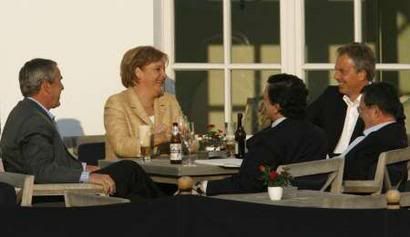
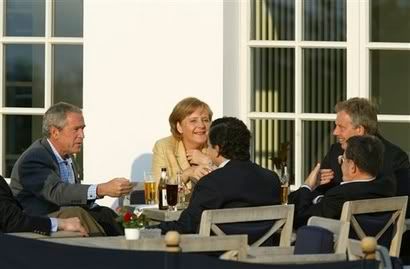
Bush, Sick With Stomach Flu . . . .

. . . . Or hangover?


The Associated Press reports:
President Bush signaled Friday the United States will press ahead with a missile defense shield in Eastern Europe despite Russia's heated objections. Poland's president expressed support for installing interceptor rockets in his country.

An upset stomach crimped Bush's schedule on a busy day that took him from Germany to Poland and finally to Italy. The president stayed in bed and skipped morning sessions at the summit of world leaders in Heiligendamm, Germany, and he appeared subdued later after talks in Poland with President Lech Kaczynski.

"Still not 100 percent but better all the time," White House deputy press secretary Dana Perino said of her boss.
On Saturday, Bush will meet for the first time with Pope Benedict XVI. Large anti-Bush demonstrations are planned in Rome, and Premier Romano Prodi had to ask his Cabinet members to refrain from taking part.

The administration made clear it was not abandoning plans for a missile-defense program in Poland and the Czech Republic despite a surprise counterproposal Thursday by Russian President Vladimir Putin to instead use a Soviet-era radar tracking station in Azerbaijan.

Putin had more suggestions on Friday for locations for missile interceptors: "They could be placed in the south, in U.S. NATO allies such as Turkey, or even Iraq," Putin said. "They could also be placed on sea platforms."

Secretary of State Condoleezza Rice, in an Associated Press interview in New York, said Friday, "One does not choose sites for missile defense out of the blue. It's geometry and geography as to how you intercept a missile."

"This is an idea that has not yet been vetted," she said of Putin's offer. "We have to see whether Azerbaijan makes any sense in the context of missile defense."

The U.S. system calls for a radar screen in the Czech Republic to watch for missile threats, and 10 interceptor rockets in Poland to shoot down any missiles. Both Bush and Kaczynski said the system would not threaten Russia. The Kremlin argues that the system would undermine its nuclear deterrent.

"The system we have proposed is not directed at Russia," Bush said after talks with Kaczynski at the presidential retreat at Jurata, a resort on the Baltic Sea. "Indeed, we would welcome Russian cooperation on missile defense."

Bush said a working group including the United States and Russia would "discuss different opportunities and different options, all aimed at providing protection for people from rogue regimes who might be in a position to either blackmail and/or attack those of us who live in free societies."

Kaczynski voiced strong support for putting the interceptors on Polish soil. "As far as the missile defense system is concerned, the two parties fully agree," Kaczynski said.

"The Russian federation can feel totally safe," said Kaczynski. He said Moscow must recognize that the world has changed since the fall of the Soviet Union nearly two decades ago.

Bush thanked the Polish president for sending troops to both Iraq and Afghanistan. Poland has nearly 900 troops in Iraq, and Bush noted that the country had recently agreed to keep them there at least through the end of the year.


The three-day summit in Heiligendamm ended with agreement to commit more than $60 billion to fight disease in Africa. Half of the money already had been pledged by Bush, and other countries would have to fill in the rest. Anti-poverty activists have complained that promises to boost annual aid to poor countries have not been met.

The leaders also warned Iran to drop its disputed nuclear program, signaling support for U.N. Security Council moves to discuss a third set of sanctions against Tehran. But, in a setback, they failed to reach a deal about the independence-seeking Serbian province of Kosovo.


White House counselor Dan Bartlett said Bush likely fell ill with "some sort of bug, probably more viral in nature" and that it appeared unrelated to anything he ate.

Bartlett joked that Bush's decision to avoid the other leaders for a while was a "precautionary step" to avoid following in the footsteps of his father, former President George H. W. Bush.


At a state dinner in Tokyo in January 1992, the elder Bush fainted and vomited into the lap of Prime Minister Kiichi Miyazawa.