Showing posts with label 9/11/01. Show all posts

Thursday, November 08, 2007

"If I Was a Conspiracy Theorist . . . .

. . . . I'd think that Bush and Cheney were just covering their asses bases."

In today's news -
Bin Laden Determined To Foreclose On 500,000 Homes:

The FBI is warning that al Qaeda may be preparing to offer adjustable-rate mortgages based on the bubble-inflated value of the homes of borrowers unable to repay them, leading to upwards of $1.3 trillion in potentially non-recoupable losses, according to an intelligence report distributed to law enforcement authorities across the country this morning. The alert said al Qaeda "hoped to disrupt the U.S. economy and has been planning the attack for the past five years."
Okay, so it's not verbatim. Here's the actual FBI's bulletin:
The unclassified shopping mall threat information was circulated by the FBI on November 7th, based on intelligence received by the FBI in late September. The full text of one version of that report is as follows: December 2007 Al-Qa’ida Plan to Target US Shopping Malls in Chicago, Illinois and Los Angeles, California.

As of August 2007, al-Qa’ida planned to strike US shopping malls in Chicago, Illinois and Los Angeles, California during the 2007 Christmas season. Al-Qa’ida hoped to disrupt the US economy and had been planning the attack for the past two years.


FBI Comment: This information was obtained through a lengthy chain of acquisition, and was provided to the source by a sub-source who spoke in confidence. The veracity of the information is uncertain but the threat is being reported due to the nature of the information.

In the days following 9/11/01, when everybody was running around like a chicken with its head cut off (as any good *shock and awe* campaign is supposed to inspire), Bush was busy spending Americans' taxpayer dollars on everything except that which might protect American citizens - starting wars where Al Qaeda was not, not providing tax breaks and incentives for the development of alternatives to Middle East oil (so that we might remove our bases from the area and end our meddlesome ways), and by providing Big Business with terrorist insurance in the event of more WTC-like disasters (plane crashes, building pull-downs, paying off the owners of skyscrapers, and, of course, reimbursing Big Insurance for the payout to Larry Silverstein, the owner of the WTC, for his losses).

My mind, however, was more productively occupied after 9/11/01 in trying to think like Osama Bin Laden: "What would a terrorist do (now)?"

If I was Bin Laden, I'd expect some reaction by the U.S. government in the way of retalliation. I'd expect the U.S. to try to hunt me down, either kill me outright or bring me to justice, and shut down my operation. I would have planned for that before I had ever launched the 9/11 attacks, so I'd have made sure I was 'tucked down' (deep in a cave in Tora Bora) by that date. I'd also have put secondary (and tertiary, and more) attacks into place in the event I couldn't surface for a good long while. Especially if there was a good chance I might not live to see daylight beyond that cave ever again.

If Al Qaeda's goal is to destroy America, only a half-wit would consider doing it one skyscraper at a time, and neither Bin Laden nor his comrade, Ayman Zawahiri, are half-wits; Bin Laden was trained by America's best clandestine operation, the CIA, and Zawahiri is well-educated and well-traveled (even if it was to the prisons of the world).

When the media talk about Al Qaeda's goal of 'destroying America', they don't really mean killing 300 million Americans and turning the land between Mexico and Canada/Pacific and Atlantic oceans into a scorched pile of rubble. 'Destroying America' is a euphemism for 'destroying our economy', and flying commercial jetliners into the Wall St. Stock Exchange wouldn't do that (much less the Cantor Fitzgerald floors and other financial companies in the WTC, or all of the buildings at the WTC site).

To destroy America's economy, you have to stop commerce.

If I was Bin Laden, I'd have had sleeper cells already in place by 9/11/01, ready to fly planes or drive cars into bridges at rush hour and shopping malls during the Christmas shopping season. Wherever people and commerce intersect, that's where I'd aim to disrupt, by blowing up roadways to prevent people from getting to work and goods from getting to market.

Bush's message to the country after 9/11/01, when the chance of further terrorist attacks was the greatest, was to "go shopping". Yet now, more than six years later, Bush lets the FBI release an alleged, non-specific warning that the malls might be targets for terrorist attacks at the start of the busiest sales period of the year. It only makes sense if the economy was already so far down in the toilet that Bush needed some cover story for the hash he's made of our economy to blame it on. In such a scenario (if I was a conspiracy theorist, believing that 9/11 was an inside job, a false flag operation), I'd think that another terrorist attack inside America's borders within the next few weeks were a sure bet.

If.

Saturday, September 08, 2007

New Osama Bin Laden Tape?

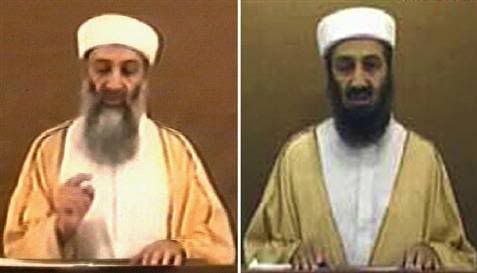
? Osama Bin Laden, 2004 | Osama Bin Laden, 2007 ?

[For current video, see end of post]
- Bin Laden tapes -
October 6, 2001 - audio tape released, supposedly of bin Laden saying any US attack on Muslim world would be repaid "twofold".

November 12, 2001 - apparent video tape of bin Laden warning US allies against supporting "White House gang of butchers".

December 20, 2003 - audio tape, purportedly from bin Laden, accuses Arab governments responding to US calls for democracy of being "infidel" agents of US.

May 6, 2004 - audio recording, said to be from bin Laden, calls for a holy war against the US-led occupation of Iraq.

October 30, 2004 - Days before the US presidential election, bin Laden in a video tells Americans Bush has deceived them and that the US could face more strikes like September 11.

Al Jazeera English reports:
A videotape purporting to show Osama bin Laden has been released in which the al-Qaeda leader warns George Bush that he is repeating the "mistakes of the former Soviet Union".

US officials were studying the tape, which, if proved to be genuine, would be the first message from bin Laden for nearly three years.
In the tape, bin Laden purportedly said that US Democrats had failed to stop the Iraq war because of the power of US corporations.

"The mistakes of Brezhnev are being repeated by Bush," says Bin Laden on the tape, in a reference to the former Soviet invasion of Afghanistan, Reuters reported.

Bin Laden said that the war in Iraq was continuing for "the same reasons which led to the failure of former president [John F] Kennedy to stop the Vietnam war - those with real power and influence are those with the most capital", the Reuters news agency reported.

The tape, released on Friday, purportedly shows Bin Laden telling US citizens that they should join Islam if they want the war in Iraq to end, though it is said to contain no specific threats.

The videotape was issued just days before the 6th anniversary on the September 11 attacks on New York.

Commenting on the video, Bush said the tape was "a reminder about the dangerous world in which we live, and it is a reminder that we must pull together to protect our people against these extremists who murder the innocent in order to achieve their political objective."

Authenticity

In the video bin Laden is shown with his beard much shorter and darker than in his last appearance, when it was streaked with grey.

A banner on the screen reads in English: "A message from Sheikh Osama bin Laden to the American people."

References in the video to Nicolas Sarkozy, the French president, and Gordon Brown, the British prime minister, are believed to suggest the video is only a few weeks old.

Bin Laden also appeared to refer to memorial ceremonies in Hiroshima and Nagasaki that took place barely a month ago, on August 6 and on August 9.

A US official said that this could mean the video was recorded later in August.

US officials have not confirmed the authenticity of the tape, but did say that it was being analysed.

Later Reuters reported an anonymous official as saying the US was "operating under the assumption that the tape is real".

Adel Darwish, political editor of Middle East magazine, told Al Jazeera that he had "doubts" about the authenticity of the tape.

"Any kid these days with an electronic kit can alter images and edit the way that he or she likes," he said.

"There is no close up on bin Laden, the beard is thick and black and then there are large segments where the image is a still."

Website shutdown

Soon after Washington announced it had the video, all the websites that usually carry statements from al-Qaeda went down and were inaccessible, in an unprecedented shutdown, according to the Associated Press news agency.

The reason for the shutdown was not immediately known.

Evan H Kohlmann, an expert at globalterroralert.com, said he suspected it was the work of al-Qaeda itself, trying to find how the video leaked to US officials.

Others suspected the US might be behind the shutdown.

Marwan Bishara, Al Jazeera's senior political analyst, said: "Bin Laden is telling the Americans that he is still there and leading."

"It [the tape]underlines the strength of words in this new asymmetrical warfare in the 21st century between the US and al-Qaeda."

Tony Fratto, a White House spokesman, said the tape demonstrated that "terrorists are out there and they are actively trying to kill Americans and threaten our interests".

Bin Laden was last seen in a video statement shortly before the US presidential election in 2004.

Since then, he has issued a number of audio messages, the last in July 2006 when he vowed al-Qaeda would fight the US across the world.

Latest video purported to have been released by Osama Bin Laden and Al Qaeda:


UPDATE: After a fairly exhaustive search (and like the other videos and audio tapes by Bin Laden of the last years), the actual video isn't anywhere to be found on the internet.

What you see here is what looks like a video news release about the Bin Laden tape by Al Jazeera English (uploaded to YouTube by Al Jazeera English) which includes a few seconds that are allegedly from the Bin Laden tape.

Of particular interest in this news report are the interviews with some "experts" about the Bin Laden video. One is with an unofficial disinformation lieutenant for the Bush administration, conservative author of the disingenuous tome, Losing bin Laden: How Bill Clinton’s Failures Unleashed Global Terror,' PajamasMedia's Richard Miniter. Miniter has a long history of supporting the war in Iraq and perpetuating the myths that "Saddam Hussein hearts Al Qaeda" and "WMD were too found in Iraq!" [No, WMD were not found in Iraq, nor trucked to Syria, Jordan, nor Never Never Land, nor Munchkin Land.]

Just this past May (2007), Miniter wrote:
"Since many of you have been asking, here is a list of links to my reporting from Iraq. I was out there in Iraq for almost five weeks, in the Green Zone*, at Camp Victory, at al Asad, at TQ (a Marine base), and at various places in Iraqi Kurdistan, including Irbil and Sulamaniya. I have more pieces in the works, including an interview with a number of Saddam’s intelligence service who says he worked with al Qaeda, an interview with a key Iranian resistance leader, a humorous feature called “Scenes from the Green Zone” and much more."

Learn more about what Representative Ellen Tauscher (D-CA) calls 'Green Zone fog', or 'death by powerpoint'.

Saturday, August 25, 2007

Pulling On The Loose Thread

"Even I Question The 'Truth' About 9/11"


From The Independent, Robert Fisk writes:
Each time I lecture abroad on the Middle East, there is always someone in the audience – just one – whom I call the "raver". Apologies here to all the men and women who come to my talks with bright and pertinent questions – often quite humbling ones for me as a journalist – and which show that they understand the Middle East tragedy a lot better than the journalists who report it. But the "raver" is real. He has turned up in corporeal form in Stockholm and in Oxford, in Sao Paulo and in Yerevan, in Cairo, in Los Angeles and, in female form, in Barcelona. No matter the country, there will always be a "raver".

His – or her – question goes like this. Why, if you believe you're a free journalist, don't you report what you really know about 9/11? Why don't you tell the truth – that the Bush administration (or the CIA or Mossad, you name it) blew up the twin towers? Why don't you reveal the secrets behind 9/11? The assumption in each case is that Fisk knows – that Fisk has an absolute concrete, copper-bottomed fact-filled desk containing final proof of what "all the world knows" (that usually is the phrase) – who destroyed the twin towers. Sometimes the "raver" is clearly distressed. One man in Cork screamed his question at me, and then – the moment I suggested that his version of the plot was a bit odd – left the hall, shouting abuse and kicking over chairs.
Usually, I have tried to tell the "truth"; that while there are unanswered questions about 9/11, I am the Middle East correspondent of The Independent, not the conspiracy correspondent; that I have quite enough real plots on my hands in Lebanon, Iraq, Syria, Iran, the Gulf, etc, to worry about imaginary ones in Manhattan. My final argument – a clincher, in my view – is that the Bush administration has screwed up everything – militarily, politically diplomatically – it has tried to do in the Middle East; so how on earth could it successfully bring off the international crimes against humanity in the United States on 11 September 2001?

Well, I still hold to that view. Any military which can claim – as the Americans did two days ago – that al-Qa'ida is on the run is not capable of carrying out anything on the scale of 9/11. "We disrupted al-Qa'ida, causing them to run," Colonel David Sutherland said of the preposterously code-named "Operation Lightning Hammer" in Iraq's Diyala province. "Their fear of facing our forces proves the terrorists know there is no safe haven for them." And more of the same, all of it untrue.

Within hours, al-Qa'ida attacked Baquba in battalion strength and slaughtered all the local sheikhs who had thrown in their hand with the Americans. It reminds me of Vietnam, the war which George Bush watched from the skies over Texas – which may account for why he this week mixed up the end of the Vietnam war with the genocide in a different country called Cambodia, whose population was eventually rescued by the same Vietnamese whom Mr Bush's more courageous colleagues had been fighting all along.

But – here we go. I am increasingly troubled at the inconsistencies in the official narrative of 9/11. It's not just the obvious non sequiturs: where are the aircraft parts (engines, etc) from the attack on the Pentagon? Why have the officials involved in the United 93 flight (which crashed in Pennsylvania) been muzzled? Why did flight 93's debris spread over miles when it was supposed to have crashed in one piece in a field? Again, I'm not talking about the crazed "research" of David Icke's Alice in Wonderland and the World Trade Center Disaster – which should send any sane man back to reading the telephone directory.

I am talking about scientific issues. If it is true, for example, that kerosene burns at 820C under optimum conditions, how come the steel beams of the twin towers – whose melting point is supposed to be about 1,480C – would snap through at the same time? (They collapsed in 8.1 and 10 seconds.) What about the third tower – the so-called World Trade Centre Building 7 (or the Salmon Brothers Building) – which collapsed in 6.6 seconds in its own footprint at 5.20pm on 11 September? Why did it so neatly fall to the ground when no aircraft had hit it? The American National Institute of Standards and Technology was instructed to analyse the cause of the destruction of all three buildings. They have not yet reported on WTC 7. Two prominent American professors of mechanical engineering – very definitely not in the "raver" bracket – are now legally challenging the terms of reference of this final report on the grounds that it could be "fraudulent or deceptive".

Journalistically, there were many odd things about 9/11. Initial reports of reporters that they heard "explosions" in the towers – which could well have been the beams cracking – are easy to dismiss. Less so the report that the body of a female air crew member was found in a Manhattan street with her hands bound. OK, so let's claim that was just hearsay reporting at the time, just as the CIA's list of Arab suicide-hijackers, which included three men who were – and still are – very much alive and living in the Middle East, was an initial intelligence error.

But what about the weird letter allegedly written by Mohamed Atta, the Egyptian hijacker-murderer with the spooky face, whose "Islamic" advice to his gruesome comrades – released by the CIA – mystified every Muslim friend I know in the Middle East? Atta mentioned his family – which no Muslim, however ill-taught, would be likely to include in such a prayer. He reminds his comrades-in-murder to say the first Muslim prayer of the day and then goes on to quote from it. But no Muslim would need such a reminder – let alone expect the text of the "Fajr" prayer to be included in Atta's letter.

Let me repeat. I am not a conspiracy theorist. Spare me the ravers. Spare me the plots. But like everyone else, I would like to know the full story of 9/11, not least because it was the trigger for the whole lunatic, meretricious "war on terror" which has led us to disaster in Iraq and Afghanistan and in much of the Middle East. Bush's happily departed adviser Karl Rove once said that "we're an empire now – we create our own reality". True? At least tell us. It would stop people kicking over chairs.

Like Fisk, I've got my own list of oddities about 9/11, not the least of which are a couple of things that have gotten little notice or mention.

The collapse of the Saloman Brothers building, aka WTC building 7, reported as collapsed by the BBC some 20 minutes before it actually collapsed. You can see the building clearly over the reporter's left shoulder:


The second anomaly is the order in which the buildings collapsed. I would think that the buildings would have collapsed in the order in which they were hit, but that's not the case.

The first WTC building hit on 9/11, the north tower, was not the first to collapse. It was the south tower, hit about 15 minutes after the north tower, that collapsed first. It collapsed 56 minutes after it was hit, versus the north tower, which collapsed 102 minutes after it had been hit.

All three building collapses looked to me like controlled demolitions, but I'm certainly no expert. What seems curious to me (and has never been addressed at all) is that the collapse of the buildings was said to be due to the jet fuel pouring down the interiors after the planes hit. Yet the building that collapsed first had less of the plane enter the building (and a much bigger gas burn-plume upon impact than the first) and was on fire for half the time that the other building had been burning from so-called interior gasoline. Building 7 had no gasoline poured into its core, and it came down like a controlled demolition, too.

I don't know what the answer is, if 9/11 was an inside job, a conspiracy. I know that the 9/11 Commission was a farce and there can be no getting beyond it all and moving forward until a legitimate, independent investigation takes place. An investigation where the panel isn't handicapped from the beginning as the 9/11 Commission was, agreeing at the inception to only investigate and report on that which its members could agree on, everything else ignored and omitted from the report.

Thursday, August 16, 2007

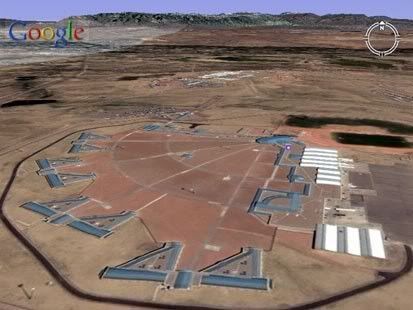
Fortress of Solitude

The Bureau of Prisons is as good at keeping prisoners in as it is at keeping reporters out.


At Denver's Westword, Alan Prendergast writes:
A hundred miles southwest of Denver, the U.S. Penitentiary Administrative Maximum houses a killer lineup of mobsters (Salvatore "Sammy the Bull" Gravano), gang leaders (Barry "The Baron" Mills), assassins (Colombian hit man Dandenis "La Quica" Muñoz Mosquera) and terrorists (John "American Taliban" Walker Lindh). But not to worry — despite some embarrassing security breaches and two inmate homicides in the past two years, ADX has never had anything close to a breakout. It's probably the most escape-proof prison in the world.

For almost six years, it's also been media-proof. High-security prisoners are locked away in the Florence supermax, out of sight and mind — and reporters can't get in to see them, no matter how hard they try.
According to documents obtained by Westword, ADX officials have denied every single media request for a face-to-face interview with supermax prisoners from January 2002 through May 2007. It doesn't matter if the request comes from a major news organization or a humble local TV station; it doesn't matter if the prisoner is a high-profile resident or an obscure career criminal. Contrary to bureau policy, prison brass have turned down every journalist, citing boilerplate "security concerns" if no handier excuse is available.

Blanket denial of access appears to have started after the September 11 attacks. When Westword sought an interview with inmate Thomas Silverstein last spring, ADX warden Ron Wiley refused. The BOP "makes every effort" to accommodate media requests, Wiley explained, but "granting your request at this time may disrupt the good order and security of this institution."

Silverstein hasn't been granted a face-to-face with any journalist for more than a decade. But further inquiry revealed that Wiley wasn't turning us down because of who the subject was; prison spokesman Isidro Garcia acknowledged that the cited security concerns applied to any interview with any prisoner.

So when was the last time ADX allowed a prisoner to be interviewed? Garcia said he wasn't authorized to release that information.

After months of Freedom of Information Act requests and side battles, the answer finally arrived. There have been exactly 100 media requests to visit ADX since 2002, and Wiley and his predecessors have denied every single one. In fact, one of the last interviews to be conducted inside the supermax before the total media ban was Westword's visit with La Quica in 2001, four months before the September 11 attacks ("The Hit Man Nobody Knows," May 17, 2001).

In 23 cases, the reason cited for the denial was that the inmate declined to be interviewed. Another eighteen were turned down because the inmate in question is subject to special administrative measures (SAMs), including a ban on all media contact. (The BOP blacked out the names of the inmates out of privacy concerns, but virtually all SAMs inmates are convicted terrorists.) Three were rejected because the requests came from academics or free-lancers who aren't considered legitimate journalists by the BOP. But more than 50 percent of the denials cited unspecified "security concerns" — because, well, any visit by any outsider could, in theory, disrupt the good order and security of the government's most insecure supermax.

CNN, the Washington Post, 60 Minutes, Newsday — they were all turned down flat. So was the tabloid press, both foreign and domestic, from America's Most Wanted to American Gangsters to some dubious offshoots of the BBC and the Tokyo Broadcasting System. Well-known authors of books on terrorism, including Peter Lance and Lawrence Wright, were barred from interviewing prisoners with ties to radical Islam. Even the Cañon City Record, practically the prison's hometown newspaper, couldn't get in the door.

Journalists who simply wanted a tour of the place, free of any contact with prisoners, fared no better. Fast Food Nation author Eric Schlosser, who's been working on a book about the American prison system for several years, sent a plaintive three-page letter to the warden in 2004, offering to let prison officials review "any physical description of the facility and its staff that I write" before publication. No dice.

"I think ADX Florence may be America's most important prison," Schlosser wrote. "Denying me access to ADX Florence will not prevent me from writing about the facility. It will only make it harder for me to give a fully accurate depiction of the facility's aims and practices."

Schlosser was seeking what all self-respecting journalists want — the ability to see the situation for themselves. Without any access to the country's most important prison, reporters have been reduced to repackaging accounts from the inmates themselves. Eric Rudolph, for example, has been a prolific correspondent for publications ranging from Time magazine to the Colorado Springs Gazette, giving his own take on life inside "Bomber's Row" at ADX. But the view from lockdown can be quite limited, and prisoners can be punished if they write too freely. They are not supposed to mention other prisoners or provide physical details that might mess with the good order and security of the institution.

BOP policy states that a warden can suspend all media visits during "an institutional emergency" but provides no other basis for an ongoing ban on inmate interviews. Warden Wiley refused a request for an interview about the five-year ban at ADX or when it might be lifted.

Saturday, July 28, 2007

From 9/11/01 to 9/11/07: "We've Come Full Circle"

Most of the 9/11 hijackers were Saudis, Saudis make up close to one half of the foreign detainees held in Iraq, Saudi Arabia is funding the Sunni tribal groups in Iraq and opponents of the al-Maliki government, and about half of the foreign fighters who arrive in Iraq each month are Saudis. Bush not only refuses to bring U.S. troops out of the region or redeploy them somewhere else in the region outside of Iraq, he's pushing through a record arms deal with the Saudis.


The NYTimes reports:
During a high-level meeting in Riyadh in January, Saudi officials confronted a top American envoy with documents that seemed to suggest that Iraq’s prime minister could not be trusted.

One purported to be an early alert from the prime minister, Nuri Kamal al-Maliki, to the radical Shiite cleric Moktada al-Sadr warning him to lie low during the coming American troop increase, which was aimed in part at Mr. Sadr’s militia. Another document purported to offer proof that Mr. Maliki was an agent of Iran.

The American envoy, Zalmay Khalilzad, immediately protested to King Abdullah of Saudi Arabia, contending that the documents were forged. But, said administration officials who provided an account of the exchange, the Saudis remained skeptical, adding to the deep rift between America’s most powerful Sunni Arab ally, Saudi Arabia, and its Shiite-run neighbor, Iraq.

Now, Bush administration officials are voicing increasing anger at what they say has been Saudi Arabia’s counterproductive role in the Iraq war. They say that beyond regarding Mr. Maliki as an Iranian agent, the Saudis have offered financial support to Sunni groups in Iraq. Of an estimated 60 to 80 foreign fighters who enter Iraq each month, American military and intelligence officials say that nearly half are coming from Saudi Arabia and that the Saudis have not done enough to stem the flow.
One senior administration official says he has seen evidence that Saudi Arabia is providing financial support to opponents of Mr. Maliki. He declined to say whether that support was going to Sunni insurgents because, he said, “That would get into disagreements over who is an insurgent and who is not.”

Senior Bush administration officials said the American concerns would be raised next week when Secretary of State Condoleezza Rice and Defense Secretary Robert M. Gates make a rare joint visit to Jidda, Saudi Arabia.

Officials in Washington have long resisted blaming Saudi Arabia for the chaos and sectarian strife in Iraq, choosing instead to pin blame on Iran and Syria. Even now, military officials rarely talk publicly about the role of Saudi fighters among the insurgents in Iraq.

The accounts of American concerns came from interviews with several senior administration officials, who spoke on the condition of anonymity because they believed that openly criticizing Saudi Arabia would further alienate the Saudi royal family at a time when the United States is still trying to enlist Saudi support for Mr. Maliki and the Iraqi government, and for other American foreign policy goals in the Middle East, including an Arab-Israeli peace plan.

In agreeing to interviews in advance of the joint trip to Saudi Arabia, the officials were nevertheless clearly intent on sending a pointed signal to a top American ally. They expressed deep frustration that more private American appeals to the Saudis had failed to produce a change in course.

The American officials said they had no doubt that the documents shown to Mr. Khalilzad were forgeries, though the Saudis said they had obtained them from sources in Iraq. “Maliki wouldn’t be stupid enough to put that on a piece of paper,” one senior Bush administration official said. He said Mr. Maliki later assured American officials that the documents were forgeries.

The Bush administration’s frustration with the Saudi government has increased in recent months because it appears that Saudi Arabia has stepped up efforts to undermine the Maliki government and to pursue a different course in Iraq from what the administration has charted. Saudi Arabia has also stymied a number of other American foreign policy initiatives, including a hoped-for Saudi embrace of Israel.

Of course, the Saudi government has hardly masked its intention to prop up Sunni groups in Iraq and has for the past two years explicitly told senior Bush administration officials of the need to counterbalance the influence Iran has there. Last fall, King Abdullah warned Vice President Dick Cheney that Saudi Arabia might provide financial backing to Iraqi Sunnis in any war against Iraq’s Shiites if the United States pulled its troops out of Iraq, American and Arab diplomats said.

Several officials interviewed for this article said they believed that Saudi Arabia’s direct support to Sunni tribesmen increased this year as the Saudis lost faith in the Maliki government and felt they must bolster Sunni groups in the eventuality of a widespread civil war.

Saudi Arabia months ago made a pitch to enlist other Persian Gulf countries to take a direct role in supporting Sunni tribal groups in Iraq, said one former American ambassador with close ties to officials in the Middle East. The former ambassador, Edward W. Gnehm, who has served in Kuwait and Jordan, said that during a recent trip to the region he was told that Saudi Arabia had pressed other members of the Gulf Cooperation Council — which includes Qatar, the United Arab Emirates, Kuwait, Bahrain and Oman — to give financial support to Sunnis in Iraq. The Saudis made this effort last December, Mr. Gnehm said.

The closest the administration has come to public criticism was an Op-Ed page article about Iraq in The New York Times last week by Mr. Khalilzad, now the United States ambassador to the United Nations. “Several of Iraq’s neighbors — not only Syria and Iran but also some friends of the United States — are pursuing destabilizing policies,” Mr. Khalilzad wrote. Administration officials said Mr. Khalilzad was referring specifically to Saudi Arabia and the United Arab Emirates.

Ms. Rice and Mr. Gates, as well as Mr. Cheney and Stephen J. Hadley, the national security adviser, have in recent months pressed their Arab counterparts to do more to encourage Iraq’s Sunni leaders to support Mr. Maliki, senior administration officials said.

“This message certainly has been made very clear in Riyadh and Abu Dhabi,” a senior administration official said. “But there is a deep reserve directed both at the person of the Maliki government but more broadly at the concept” that Iraq’s Shiites are “surrogates of Iran.” Saudi Arabia has grown increasingly concerned about the rising influence of Iran in the region.

A spokesman at the Saudi Embassy in Washington did not return telephone calls on Thursday. But one adviser to the royal family said that Saudi officials were aware of the American accusations. “As you know by now, we in Saudi Arabia have been active in having a united Arab front to, first, avoid further inter-Arab conflict, and at the same time building consensus to move toward a peace settlement between the Arabs and Israel,” he said. “How others judge our motives is their problem.”

Even as American frustration at Saudi Arabia grows, American military officials are still cautious about publicly detailing the extent of the flow of foreign fighters going to Iraq from Saudi Arabia. Earlier this month, for instance, Brig. Gen. Kevin Bergner, the top American military spokesman in Iraq, detailed the odyssey of a foreign fighter recently captured in Ramadi.

In his public account, General Bergner told reporters that the man had arrived in Syria on a chartered bus, was smuggled into Iraq by a Syrian facilitator, and was given instructions to carry out a suicide truck bombing on a bridge in Ramadi. He did not identify the man’s nationality, but American officials in Iraq say he was a Saudi.

The American officials in Iraq also say that the majority of suicide bombers in Iraq are from Saudi Arabia and that about 40 percent of all foreign fighters are Saudi. Officials said that while most of the foreign fighters came to Iraq to become suicide bombers, others arrived as bomb makers, snipers, logisticians and financiers.

American military and intelligence officials have been critical of Saudi efforts to stanch the flow of fighters into Iraq, although they stress that the Saudi government does not endorse the idea of fighters from Saudi Arabia going to Iraq.

On the contrary, they said, Saudi Arabia is concerned that these young men could acquire insurgency training in Iraq and then return home to carry out attacks in Saudi Arabia — similar to the Saudis who turned against their homeland after fighting in Afghanistan in the 1980s.

The Bush administration’s relationship with Saudi Arabia has deteriorated steadily since the United States invasion of Iraq, culminating in April when, bitingly, King Abdullah, during a speech before Arab heads of state in Riyadh, condemned the American invasion of Iraq as “an illegal foreign occupation.”

A month before that, King Abdullah effectively torpedoed a high-profile meeting between Israelis and Palestinians, planned by Ms. Rice, by brokering a power-sharing agreement between the Palestinian president, Mahmoud Abbas, and the militant Islamist group Hamas that did not require Hamas to recognize Israel. While that agreement eventually fell apart, the Bush administration, on both occasions, was caught off guard and became infuriated.

But Saudi officials have not been too happy with President Bush, either, and the plummeting of America’s image in the Muslim world has led King Abdullah to strive to set a more independent course.

The administration “thinks the Saudis are no longer behaving the role of the good vassal,” said Steve Clemons, senior fellow and director of the American Strategy Program at the New America Foundation. The Saudis, in turn, “see weakness, they see a void, and they’re going to fill the void and call their own shots.”

From the Marine Corps Times:
A key aide says Prime Minister Nouri al-Maliki’s relations with U.S. commander Gen. David Petraeus are so poor the Iraqi leader may ask Washington the withdraw the well-regarded U.S. military leader from duty here.

The Iraqi foreign minister calls the relationship “difficult.”

Petraeus says his ties with al-Maliki are “very good” but acknowledges expressing “the full range of emotions” on “a couple of occasions.”

U.S. Ambassador Ryan Crocker, who meets together with al-Maliki and Petraeus at least weekly, concedes “sometimes there are sporty exchanges.”

Al-Maliki has spoken sharply — not of Petraeus or Crocker personally — but about their tactic of welcoming Sunni militants into the fight against al-Qaida forces in Anbar and Diyalah provinces.

But the reality of how the three men get along likely lies somewhere between the worst and best reports about their relationship — perhaps one of the most important in the world and unquestionably central to the future of Iraq, the larger Middle East and scores, if not hundreds, of political, diplomatic and military careers in the United States.

A tangle of issues confront the three men, and none of them present clear or easy solutions:

— Al-Maliki, a Shiite who spent years in exile under Saddam Hussein, hotly objects to U.S. tactic of recruiting men with ties to the Sunni insurgency into the ongoing fight against al-Qaida. He has complained loudly but with little effect except a U.S. pledge to let al-Maliki’s security apparatus vet the recruits before they join the force. He also has spoken bitterly, aides say, about delivery delays of promised U.S. weapons and equipment for his forces.

— Petraeus is confronted with an Iraqi military and police force, nominally under al-Maliki’s control, that has in many cases acted on sectarian — namely Shiite — not national Iraqi interests. He has faced a significant challenge in persuading al-Maliki to shed his ties to radical Shiite cleric Muqtada al-Sadr, who runs the Mahdi Army militia.

— Crocker’s problems with the Iraqi leader are the appearance of foot-dragging or ineffectiveness on the political front — the need to shepherd critical benchmark legislation through parliament. U.S. opponents of the war will undoubtedly demand from Crocker, when he reports to congress in September, an explanation of why U.S. troops are fighting and dying to give al-Maliki political breathing space that the Iraqi leader will not or cannot capitalize on.

First word of strained relations began leaking out with consistency earlier this month.

Sami al-Askari, an key aide to al-Maliki and a member of the prime minister’s Dawa Party, said the policy of including one-time Sunni insurgents in the security forces shows Petraeus has a “real bias and it bothers the Shiites. It is possible that we may demand his removal.”

Foreign Minister Hoshyar Zebari said in an interview with Newsweek, that the Petraeus-al-Maliki relationship was “difficult.”

“The prime minister cannot just pick up the phone and have Iraqi army units do what he says. Maliki needs more leverage.”

A lawmaker from the al-Sadr bloc, who refused use of his name fearing the party would expel him over his continued close ties to al-Maliki, said the prime minister has complained to U.S. President George W. Bush about the policy of arming Sunnis.

“He told Bush that if Petraeus continues doing that he would arm Shiite Militias. Bush told al-Maliki to calm down,” according to the lawmaker who said he was told of the exchange by al-Maliki.

The lawmaker said al-Maliki once told Petraeus: “I can’t deal with you any more. I will ask for someone else to replace you.”

In an angry outburst earlier this month, al-Maliki said American forces should leave and turn over security to Iraqi troops. He quickly backpedaled, but the damage was done.

“There is no leader in the world that is under more pressure than Nouri al-Maliki, without question. Sometimes he reflects that frustration. I don’t blame him. I probably would too,” Crocker said.

The ambassador, one of the State Department’s most seasoned Middle East diplomats, appeared to be genuinely fond of al-Maliki and profoundly understanding of the Iraqi leader’s troubles.

“We are dealing with existential issues. There are no second tier problems ... so there is a lot of pressure. And we all feel very deeply about we’re trying to get done. So yeah, sometimes there are sporty exchanges,” he said.

“And believe me I’ve had my share of them. That in no way means, in my view, strained relations. I have great admiration for Prime Minister Maliki, and I know General Petraeus does as well. And I like to think it is reciprocal. Wrestling with the things we’re all wrestling with here, it would almost be strange if you didn’t get a little passionate from time to time.”

Petraeus, a wily, rising star at the Pentagon who is known for holding his cards close to his chest, called his relations with al-Maliki “very good...and that’s the truth,” but acknowledged, “we have not pulled punches with each other.”

Here’s why, he said:

“We have made an enormous investment here — 3,600-plus soldiers, sailors, airmen and Marines have given their lives. And where we see something that could unhinge the progress that our soldiers and their soldiers are fighting to make ... or jeopardize some of the very hard-fought gains that we have made, I’m going to speak up. And I have on occasion. And on a couple of occasions have demonstrated the full range of emotions.”

All sides spoke with the critical September reports by Crocker and Petraeus to Congress clearly at the front of their minds — the need to make it clear to an increasingly hostile U.S. legislative branch that progress is being made and it would be wrong to start pulling out troops and cutting support now.

It will be a tough sell, but not for lack of getting their views before the public in advance of walking into Congressional committee rooms about seven weeks from now.

King Abdullah has called the U.S. military presence in Iraq an "illegitimate occupation," and according to 'congressional sources,' the Saudis have been either unable or unwilling to stop suicide bombers who have ended up in Iraq.

Members of Congress vowed yesterday to oppose any deal to Saudi Arabia on grounds that the kingdom has been unhelpful in Iraq and unreliable at fighting terrorism.

Better late than never.

Wednesday, April 25, 2007

If, As Giuliani Claims, "Only Republicans Can Prevent Terror Attacks At Home," Then . . . .

. . . . Republicans were behind 9/11/01 and the anthrax letters.


That's the only logical conclusion you can come to after Republicans make false and frankly, despicable charges against Democrats' ability to secure the safety of Americans home and abroad. Because the fact of this matter is that deaths of Americans from terrorist attacks, at home and abroad, increase exponentially when Republicans are in charge.

Not coincidentally, the gap between the rich and poor widens, and the number of people living in poverty increases.

This current wave of terrorism (and this particular brand of terrorism, 'Islamic-jihadist') is unique in that for the first time, U.S. citizens are being targeted, although not very often. The roots of this brand of terror is in America's foreign policy going back to the 1970s and the U.S. oil-driven economy of rapid capitalist growth and expansion without restraint or regulation.

Islamic-jihadists didn't invent the tactic of hijacking airplanes or using them as "suicide bombs." But the numbers of hijackings, shootings down or planting of explosives on airplanes have increased with each Republican administration. Republican policies have alienated substantial numbers of people around the world, with more people becoming motivated toward responding with extreme violence with each passing administration. It only makes sense that as the world's population grows, and the corporate, pro-growth, anti-regulatory politicians strip-mine and asphalt over the earth, those people who are being displaced (geographically and economically) would eventually take their beef to the people who are democratically-electing the planet's robber barons - We, the People of the United States.

September 11, 2001 really was only a matter of time.

And to listen to the Republican candidates for President, despite the damage that their policies are doing to people and to the planet, they aren't going to stop. In fact, just like Bush-Cheney, they're going full speed ahead both on the war front and on the anti-populist economic front.

Politico.com reports:
Rudy Giuliani said if a Democrat is elected president in 2008, America will be at risk for another terrorist attack on the scale of Sept. 11, 2001.

But if a Republican is elected, he said, especially if it is him, terrorist attacks can be anticipated and stopped.

“If any Republican is elected president —- and I think obviously I would be the best at this —- we will remain on offense and will anticipate what [the terrorists] will do and try to stop them before they do it,” Giuliani said.

The former New York City mayor, currently leading in all national polls for the Republican nomination for president, said Tuesday night that America would ultimately defeat terrorism no matter which party gains the White House.

“But the question is how long will it take and how many casualties will we have?” Giuliani said. “If we are on defense [with a Democratic president], we will have more losses and it will go on longer.”

“I listen a little to the Democrats and if one of them gets elected, we are going on defense,” Giuliani continued. “We will wave the white flag on Iraq. We will cut back on the Patriot Act, electronic surveillance, interrogation and we will be back to our pre-Sept. 11 attitude of defense.”

He added: “The Democrats do not understand the full nature and scope of the terrorist war against us.”

After his speech to the Rockingham County Lincoln Day Dinner, I asked him about his statements and Giuliani said flatly: “America will be safer with a Republican president.”

Giuliani, whose past positions on abortion, gun control and gay rights have made him anathema to some in his party, believes his tough stance on national defense and his post-Sept. 11 reputation as a fighter of terrorism will be his trump card with doubting Republicans.

“This war ends when they stop coming here to kill us!” Giuliani said in his speech. “Never, ever again will this country ever be on defense waiting for [terrorists] to attack us if I have anything to say about it. And make no mistake, the Democrats want to put us back on defense!”

Giuliani said terrorists “hate us and not because of anything bad we have done; it has nothing to do with Israel and Palestine. They hate us for the freedoms we have and the freedoms we want to share with the world.”

Giuliani continued: “The freedoms we have are in conflict with the perverted, maniacal interpretation of their religion.” He said Americans would fight for “freedom for women, the freedom of elections, freedom of religion and the freedom of our economy.”

Addressing the terrorists directly, Giuliani said: “We are not giving that up, and you are not going to take it from us!”

Giuliani also said that America had been naive about terrorism in the past and had missed obvious signals.

“They were at war with us before we realized it, going back to ’90s with all the Americans killed by the PLO and Hezbollah and Hamas,” he said. “They came here and killed us in 1993 [with the first attack on New York’s World Trade Center, in which six people died], and we didn’t get it. We didn’t get it that this was a war. Then Sept. 11, 2001, happened, and we got it.”


Tuesday, February 13, 2007

Failing 9/11 Responders Over & Over & Over Again

9/11 Health Costs $393 Million Per Year


Associated Press reports:
Respiratory ailments, mental trauma and other problems that arose after the Sept. 11 attacks are costing the U.S. health care system $393 million per year, according to an analysis that city officials released Tuesday.

The estimate was part of a report by a panel that Mayor Michael Bloomberg convened last year to study Sept. 11 health effects and treatment programs, which are said to be running out of funding 5 1/2 years after the attacks.

Some of the people who worked amid the dust, smoke and ash at the site have died. Others have developed conditions including respiratory problems, anxiety, depression and post-traumatic stress disorder, and the report noted the troubling prospect of later-emerging diseases including cancer and pulmonary fibrosis.

The panel noted the liability fight as another mounting expense. At least 6,000 federal lawsuits have been filed by emergency workers who aided in the rescue operation and nine-month cleanup, alleging that the city and its contractors were negligent in monitoring the air.

Thousands more lawsuits are expected, and the city already has spent millions fighting the claims. That money has come from the WTC Captive Insurance Co., which Congress funded with $1 billion in 2004 to provide liability coverage against claims.

Instead of using the money in court, the mayor's panel recommended that Congress change the law to let the city put the money into a compensation program for sick workers, an idea that members of New York's delegation have already floated.

"We're not about to abandon the men and women who helped lift our city back onto its feet during our time of greatest need," Bloomberg said. "They deserve first-class care without exception, and we will work to ensure that they get it."

The fund would be similar to the victims compensation fund that awarded $7 billion to the families of those who died in the attacks and to injured survivors. The application deadline for that fund was December 2003, which excluded those whose diagnoses or symptoms came later.

The Bush administration last month announced a proposal to spend at least $25 million more on treatment programs. Sen. Hillary Rodham Clinton, D-N.Y., is calling for $1.9 billion over several years.

Several sick workers said Tuesday they were frustrated that it was taking so long to ensure health care.

"When I got called to the World Trade Center, it did not take me five years to get there -- it shouldn't have taken five years to talk about compensation," said Marvin Bethea, a paramedic who survived the collapse of the twin towers and suffers from afflictions including post-traumatic stress disorder and asthma. "People don't want to be millionaires. They're in the hole because of all these health problems."

Monday, September 11, 2006

Canadian Anti-Terror Laws to Sunset Without Being Tested in Court

Five years after the Sept. 11 attacks that rocked the western world and made tracking down terrorists an international preoccupation, not one person has yet gone to trial in Canada on a terrorism-related offence:
In fact, before any of this country's first home-grown terror suspects get their day in court in 2007 and beyond, all three pillars of Canada's anti-terror judicial framework will have been tested before the bench.

The Supreme Court of Canada is expected to rule before year's end on the constitutionality of national security certificates, which pre-date 9-11 by many years but have been used since then to lock up alleged Islamic terrorists without full public disclosure of evidence.

Closing arguments have just been heard in a constitutional and procedural challenge to the Security of Information Act, used to obtain RCMP warrants to raid the home of Ottawa journalist Juliet O'Neill after she was apparently leaked details of a case file.

And next Monday - Sept. 11 - the lawyer for Momin Khawaja, an Ottawa software developer implicated in a British bombing plot, will be in Ontario Superior Court attempting to have Canada's anti-terrorist legislation itself struck down.

The extraordinary legal measures, Khawaja's lawyer Lawrence Greenspon argues in his factum filed with the court, are "yet another in a long list of crisis-style responses undertaken by the government of Canada not in crisis but during a time of stress."

It's an opening gambit that legal experts say is unlikely to forestall the scheduled January start of Khawaja's trial, even if - as some of those same experts argue - Greenspon has a legitimate point.

"It's historically observable and will always be true that courts are only going to interfere at the margins with government's judgments when it comes to national security," says Grant Huscroft, an expert on constitutional law at the University of Western Ontario.

"In retrospect, a lot of the (judicial) deference to the government looks like over-reaction - and civil libertarians are always most concerned in times of external threats to the country for that very reason."

In Canada, it means new anti-terrorist laws have been put on trial before any alleged terrorists.

In fact, Parliament is set to resume its review of the federal anti-terror legislation this fall, and a couple of its most draconian provisions have sunset clauses due in December.

When Bill C-36 was rushed into law in fall 2001, it created several new offences under the Criminal Code, including life sentences for counselling terrorist activity and 10-year sentences for terrorist financing.

The law allows preventive arrests and detention without charge for up to 72 hours and compels individuals to testify before a judge at investigative hearings (measures that are not known to have been used to date and that expire if not renewed this year).

It makes it easier for police to obtain wiretap warrants and permitted, for the first time, the top-secret Communications Security Establishment to conduct electronic surveillance on Canadian residents as well as foreign targets.

And yet, the government's top rationale for the tough measures was neither investigative nor prosecutorial.

Liberal justice minister Anne McLellan introduced Bill C-36 on Oct. 16, 2001, by premising the legislation on the Sept. 11 attacks: "These events challenged Canadians' sense of safety and security and it is this that we must address as our first priority."

Six weeks later, the Liberal chairman of the Commons justice committee reiterated the point when the Commons passed the legislation.

"The first fundamental human right is the right to feel a sense of personal security," said Andy Scott. "I think we had to act."

By such a measure, the anti-terror legislation has been a qualified failure.

Pollsters suggest Canadians today know little and think less about the tough anti-terror laws. We are also more likely to expect future terrorist attacks on Canadian soil than we were in those panicked autumn days of 2001.

The jury is still out on whether C-36 has been the bane of terrorists and a boon to security officials.

"To date, Canada's anti-terrorism efforts seem to have been largely conducted using pre-9-11 investigatory powers and criminal legislation," says Rex Brynen, who teaches political science at McGill University in Montreal.

Brynen doesn't necessarily see that as a critique of the anti-terror act, which he characterizes as a means to "plug holes" rather than a rewrite of terrorist law.

Jack Hooper, deputy director of the Canadian Security Intelligence Service, told a Senate committee in May that CSIS has two options in dealing with domestic terror suspects: "We can work in collaboration with law enforcement to prosecute them or we can work to disrupt their activities."

The public may never understand how great or how little the impact of disruption activities because they're obscured by a veil of security.

What's attracted more attention to date than the provisions of Bill C-36 are Canada's much-criticized security certificates, which Brynen notes were used before 9-11 for years with little public outcry.

Currently, five alleged Islamic terrorists are being held without charge under security certificates while fighting government attempts to deport them.

Critics say the government would prefer to ship terror suspects off to repressive overseas regimes with lax civil and legal codes, rather than take a chance on a failed prosecution in Canadian courts.

In the case of Momin Khawaja - arrested in Ottawa in the spring of 2004 in connection with a British investigation that also collared seven Britons - as in the case of the 17 terror suspects charged this June in Ontario, the government has no choice but to deal with Canadian citizens in Canada's courts.

Those cases will grind through the court system no sooner than 2007.

That timeline gives parliamentarians one other matter to consider this fall as they examine the five-year expiry date on some aspects of the anti-terror legislation.

Back in 2001, some MPs wanted a three-year sunset clause but the justice minister insisted on five: "We wanted to ensure that there would be a record for parliamentarians to consider," McLellan said at the time.

Make of it what you will, but five years after the Sept. 11 terrorist attacks, there remains no public record of C-36's success or failure.


Wednesday, May 31, 2006

The Buried 9/11 Numbers

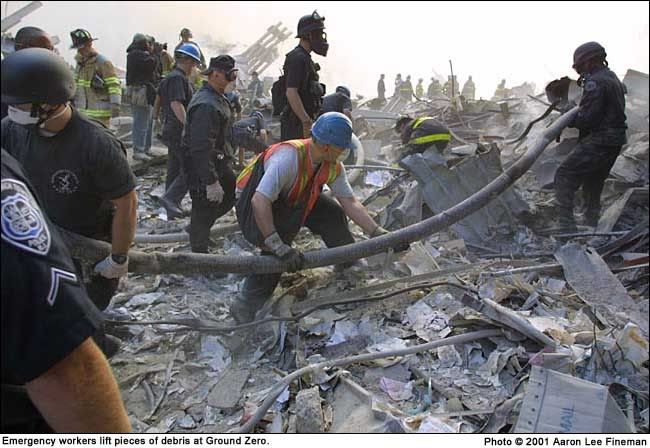
The 9-11 Victims Compensation Fund made awards to 1,400 FDNY employees. But almost twice that number have filed affidavits of their 9-11 service in case they develop or die from an illness stemming from their time at the site (FDNY)

Preparing for a higher 9/11 toll, the Village Voice reports:
New York can no longer breathe easy about the fate of people who responded to Ground Zero—not after the case of Detective James Zadroga, the high-profile workers comp fight of former deputy mayor Rudy Washington, or the study finding that first responders on 9-11 typically absorbed about 12 years' worth of lung damage in a single, bad day. None of this is surprising to the men and women who raced to the towers and have been struggling for months or years to catch their breath, literally. Nor is the risk of WTC illness news to city and state officials, who haggled at length over a law that grants Ground Zero rescuers a presumptive line-of-duty disability if they come down with certain illnesses. That measure was signed last year.

But the Zadroga case and others like it have upped the stakes, because people aren't just getting sick. Now, they are dying. And when they die, their families will not be able to collect disability payments for as long as they would have if the death had been in the line of duty.

That's why public employee unions are pressing for another presumptive bill, this one covering death benefits. The assembly version sponsored by Speaker Sheldon Silver (A11255) and its Senate counterpart by Sen. Martin Golden (S7885-A) are "intended to rectify this inequity, so these brave men and women facing a grim medical prognosis, need not worry about the financial future and security of their loved ones and dependents," according to the bills' write-up.

The proposed law would cover "uniformed personnel who participated within one year of the terrorist attack, in rescue, recovery, clean-up and related activity at or near ground zero, worked at the Fresh Kills Land Fill, worked at the New York morgue or the temporary morgue on pier locations on the west side of Manhattan, or manned barges between the west side of Manhattan and the Fresh Kills Land Fill." It would apply to people who "registered within the time period specified in such law, or would have met the criteria if not already retired on an accidental disability."

The Bloomberg administration opposed the presumptive disability bill because of the costs it could impose on the city, estimated at around $50 million a year. The deaths benefits bill would add to those costs. But the exact price tag of either measure is a mystery. The city's Independent Budget Office hopes to generate a projection, but IBO chief of staff Doug Turetsky tells the Voice, "At this point, we haven't got the data to do that." The effect of the Ground Zero diseases on thousands of rescuers is a great unknown. Nobody can predict how many will suffer or succumb, or when.

Already, thousands have filed affidavits attesting to their WTC-related service. So far, 2,596 active and retired members have filed Ground Zero affidavits with the FDNY pension fund; 2,870 with the Police Pension Fund; and 973 with NYCERS. Ostensibly, those affidavits are for potential future disability filings under last year's presumptive law. But some first responders who already have line-of-duty disability benefits might be filing in anticipation of the death benefit that will adhere should the Silver/Golden measures become law.

Many 9-11 rescuers have no choice but to make these kinds of calculations. They were forced out of work years before they thought they would leave, and could face either a prolonged retirement or a premature death. Some are wrestling with difficult decisions over how to structure their pensions, trying to balance their current need for income against the possibility that they will die early and leave families behind. Complicating the picture is that while some first responders received payouts from the federal Victims Compensation Fund, others did not. The VCF, for example, didn't cover people whose primary ailment was post-traumatic stress disorder.

The fund is closed. But symptoms of other underlying illnesses are only now emerging. Nearly five years after 9-11, in bronchioles and bloodstreams, the attack continues.


Tuesday, March 11, 2003

CIA Kidnaps & Interrogates The Children Of Alleged 9/11 "Mastermind" In U.S. Custody

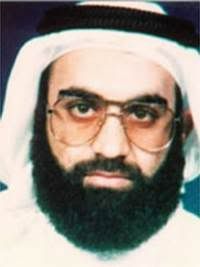
Khalid Sheikh Mohammed

Olga Craig of The Sunday Telegraph reports:
Two young sons of Khalid Sheikh Mohammed, the suspected mastermind of the September 11 attacks, are being used by the CIA to force their father to talk.

Yousef al-Khalid, 9, and his brother, Abed al-Khalid, 7, were taken into custody in Pakistan in September when intelligence officers raided a flat in Karachi where their father had been hiding.


Mohammed fled just hours before the raid but his sons and another senior al-Qaeda member were found cowering behind a wardrobe in the apartment. [Khalid Sheikh Mohammed was taken into custody in a joint Pakistani-CIA operation on March 1, 2003 near Islamabad.]

The boys have been held by the Pakistani authorities but this weekend they were flown to America where they will be questioned about their father.
CIA interrogators confirmed that the boys were staying at a secret address where they were being encouraged to talk about their father's activities. "We are handling them with kid gloves," said one official. "After all, they are only little children, but we need to know as much about their father's recent activities as possible. We have child psychologists on hand at all times and they are given the best of care."

Mohammed, 37, is being held in solitary confinement at the Bagram US military base in Afghanistan. He is being subjected to "stress and duress" interrogation techniques.

He has been told that his sons are being held and is being urged to divulge future attacks against the West and reveal the whereabouts of Osama bin Laden.

"He has said very little so far," a CIA official said on Saturday. "He sits in a trance-like state and recites verses from the Koran. But while he may claim to be a devout Muslim, we know he is fond of the Western-style fast life. His sons are important to him. The promise of their release and their return to Pakistan may be the psychological lever we need to break him."

The Kuwaiti-born Mohammed named his older son after Ramzi Yousef, his nephew, who was convicted of masterminding the 1993 attack on New York's World Trade Centre. After the attack, Yousef fled to the Philippines with his uncle.

When bomb-making chemicals set fire to their Manila apartment, Yousef fled to Pakistan, where he was captured in an Islamabad hotel room in 1995.

Mohammed was in the next room and, audaciously, gave an account of the arrest to a reporter. By the time Pakistani authorities found out his identity he had fled the country.

He was eventually arrested on March 1 in Rawalpindi, near the home of Pakistan's President Pervez Musharraf. Among the items found was a photograph of a smiling Mohammed with his arms around his two sons.

Known as "The Engineer", he is suspected of masterminding the Bali bombings and slashing the throat of American reporter Daniel Pearl in Pakistan in January last year.

Little is known of his sons' mother, who is thought to be Pakistani. "All we know is that she is the sister of an al-Qaeda member that Khalid Sheikh Mohammed met at a Pakistan college, the University of Dawa al Jihad, in the late 1980s," a source said.

Khalid Sheikh Mohammed has been indicted in America for plotting to blow up American commercial airliners in the Philippines in the mid-1990s, so once in the custody of a coalition partner, extradicting him to the U.S. to face trial and prison doesn't require putting the U.S. onto wartime footing.

But by what legal authority is the CIA kidnapping and interrogating children of suspected terrorists? Who is overseeing the care and rights of these children? What does the CIA plan to do with these children once they're done interrogating them?